The Origins of the Diamond Industry in Cuijk
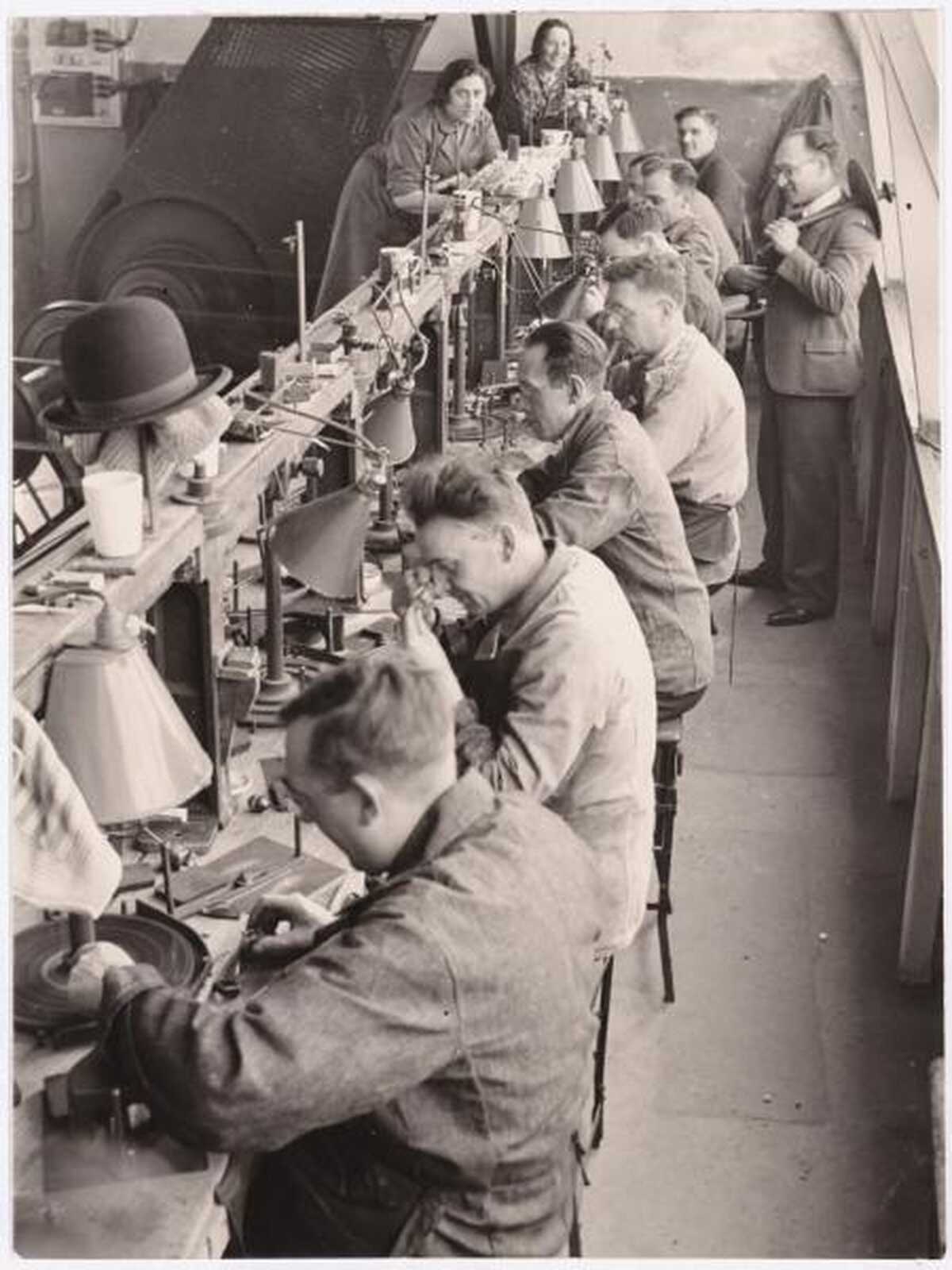
After the Second World War
For centuries, Amsterdam had been the heart of the Dutch diamond industry. Diamond polishing was a highly specialised craft, often passed down through generations. A significant proportion of its skilled craftsmen were of Jewish descent.
The Second World War had devastating consequences for this community. Thousands of Jewish diamond workers were deported, and many never returned. Amsterdam's diamond industry lost not only a substantial part of its workforce, but also generations of craftsmanship, knowledge and experience.
In the years following the war, the industry faced the difficult task of rebuilding. International competition had intensified, while the established labour structure, with its strong trade union influence, presented additional economic challenges.
These circumstances encouraged some diamond entrepreneurs to explore opportunities beyond Amsterdam.
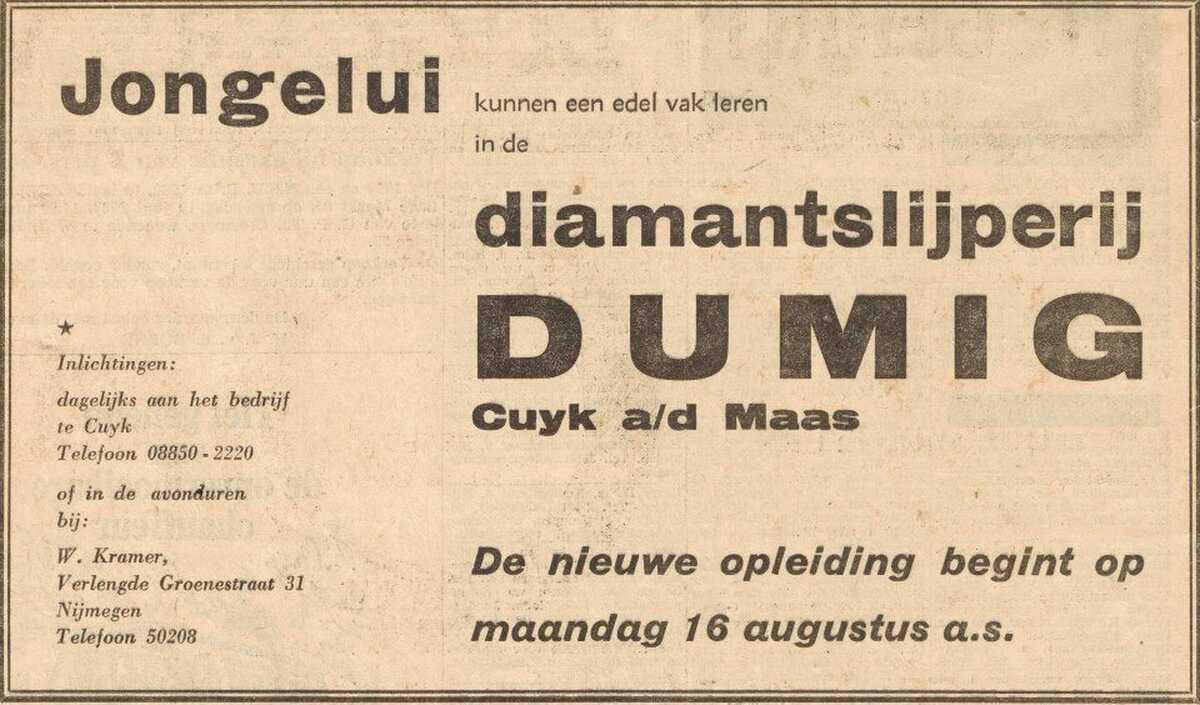
A New Beginning, 1953
The choice fell on Cuijk, a small town in the Dutch province of North Brabant, where the local authorities were actively encouraging industrial development and employment.
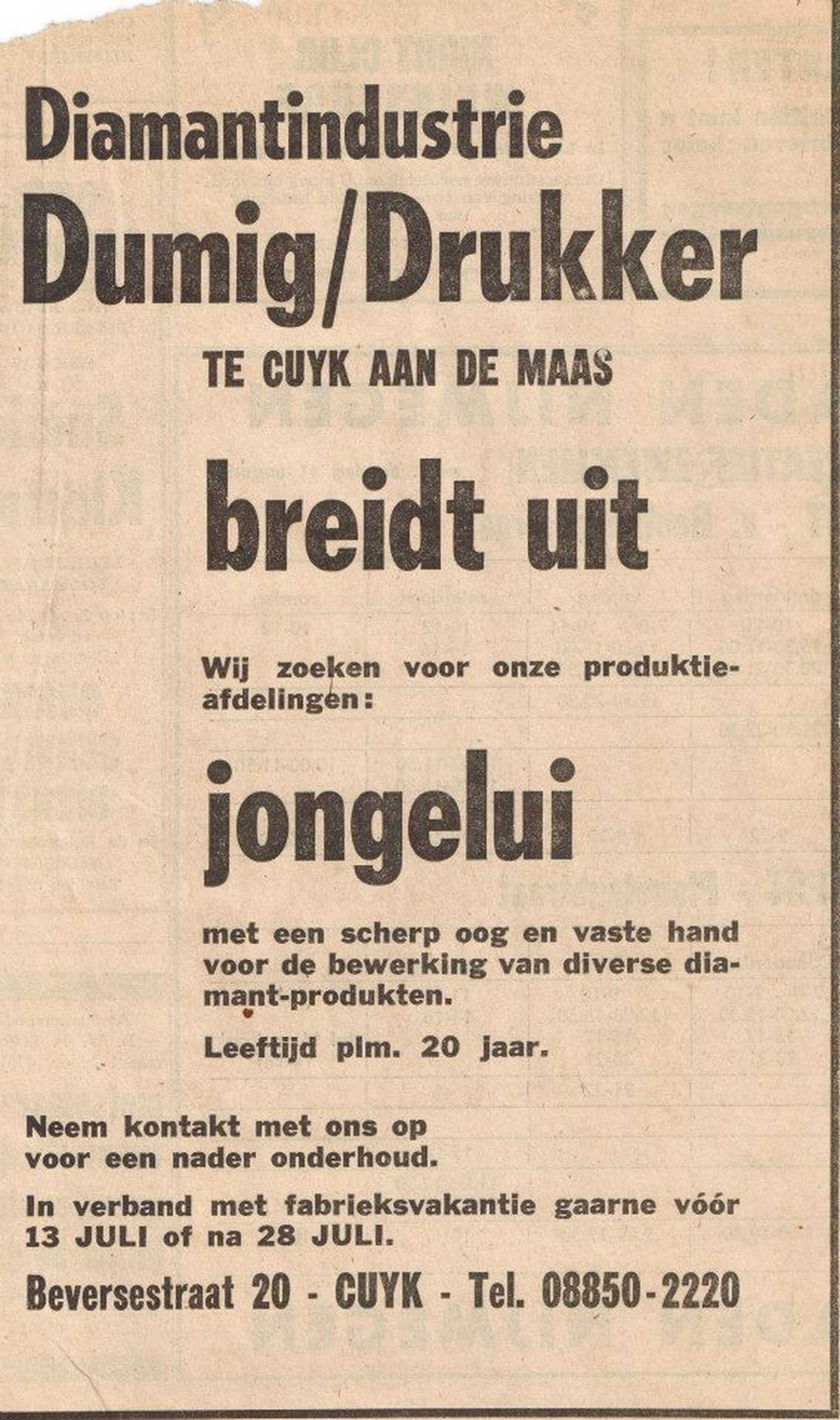
In 1953, the training of a new generation of diamond craftsmen began. This was a remarkable undertaking, as Cuijk had no previous tradition of diamond polishing.
An experienced master diamond polisher relocated from Amsterdam to Cuijk to teach young people the craft. Starting from scratch, they had to learn how to work with a material that demanded exceptional skill, patience and precision.
What began as a diamond polishing workshop in a small Dutch town gradually developed into an industry in which traditional craftsmanship increasingly evolved into advanced precision technology.
And so, in 1953, the foundations of the diamond industry in Cuijk were laid.
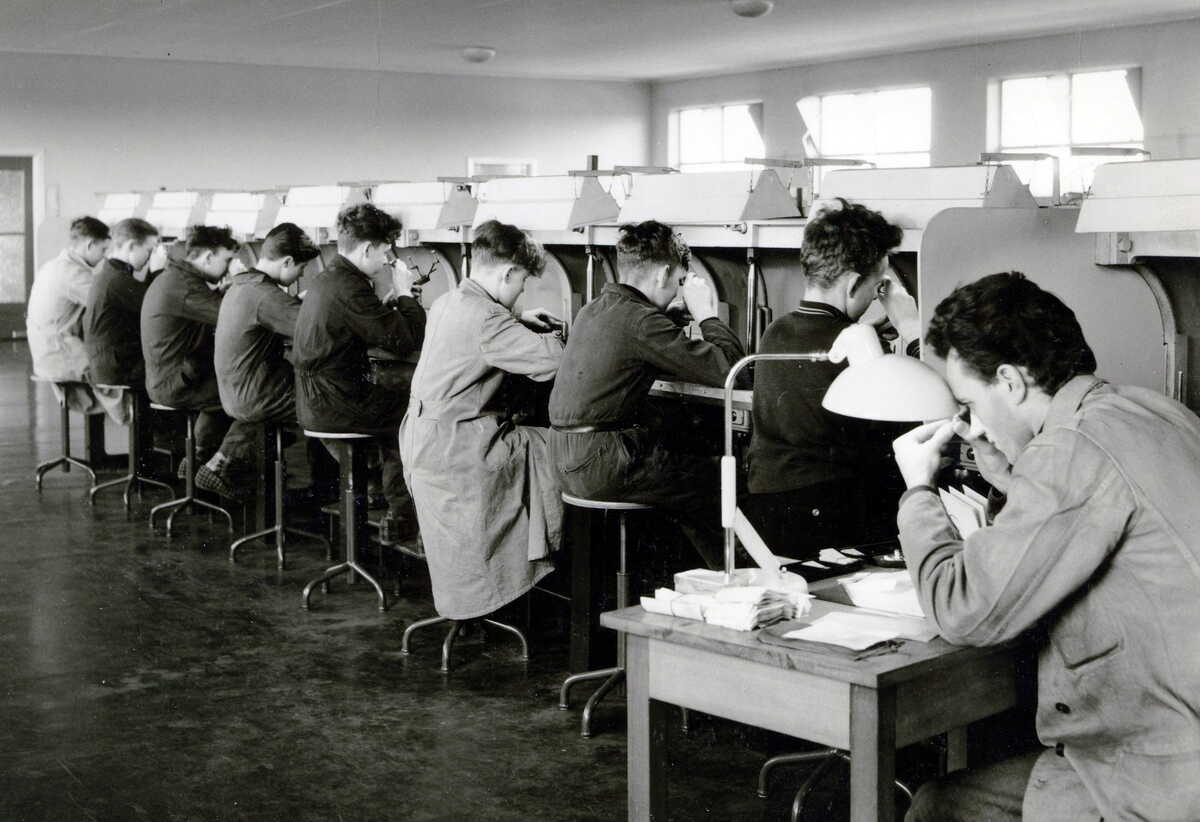
1953, A New Generation of Diamond Craftsmen
In 1953, the training of a new generation of diamond craftsmen began in Cuijk. Approximately thirty young men, many of whom had received technical training in metalworking at a school in nearby Boxmeer, were recruited to learn the art of diamond polishing. Under the guidance of an experienced master diamond polisher from Amsterdam, they were introduced to a craft that had traditionally been passed down from generation to generation.
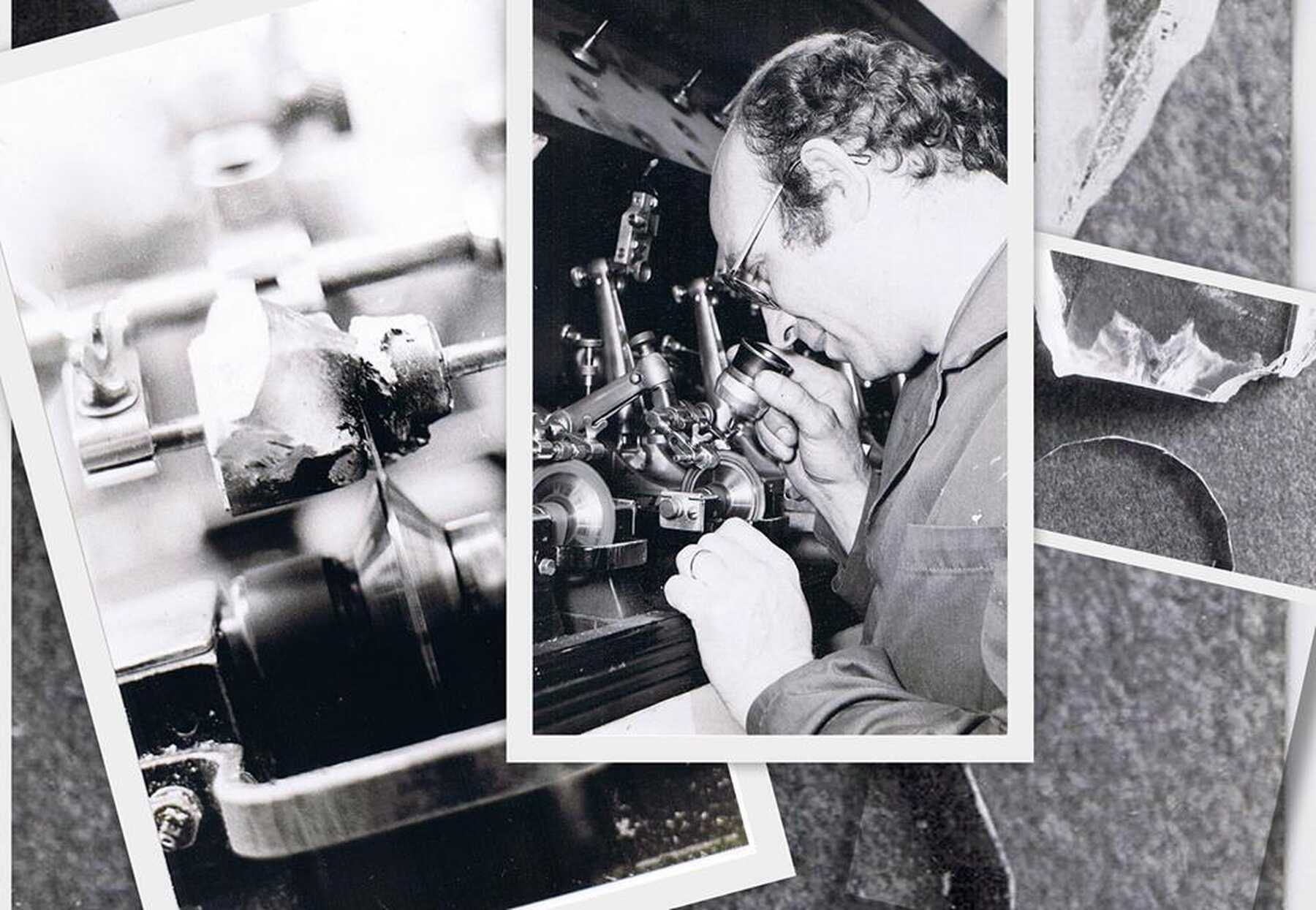
Working with diamond required exceptional patience, precision and concentration. Every facet had to be carefully shaped and polished, using techniques that could only be mastered through extensive practice and experience. For these young craftsmen, it marked the beginning of an entirely new profession. For Cuijk, it was the first step towards establishing its own diamond industry.
A new generation was learning a centuries-old craft, far from its traditional roots in Amsterdam.
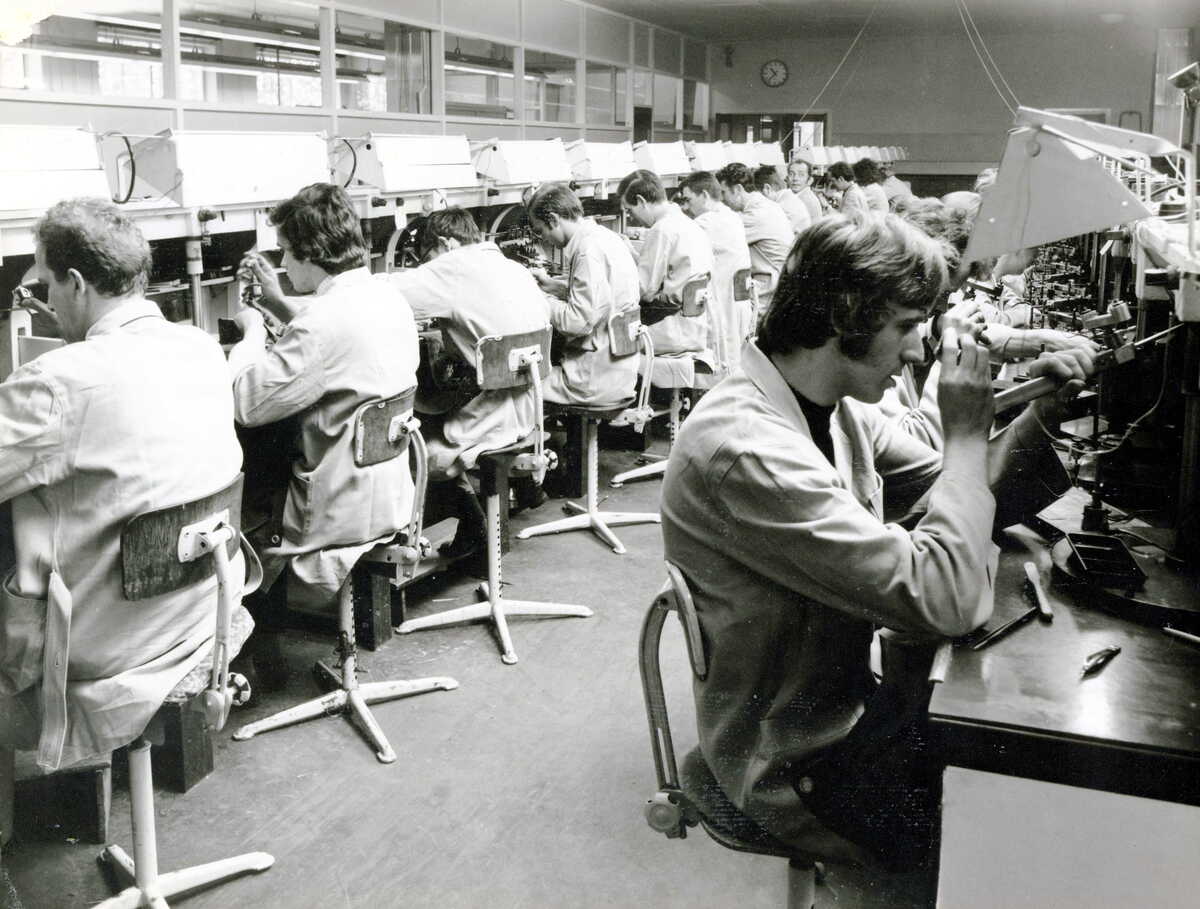
The Sixties: From Craftsmanship to Industry
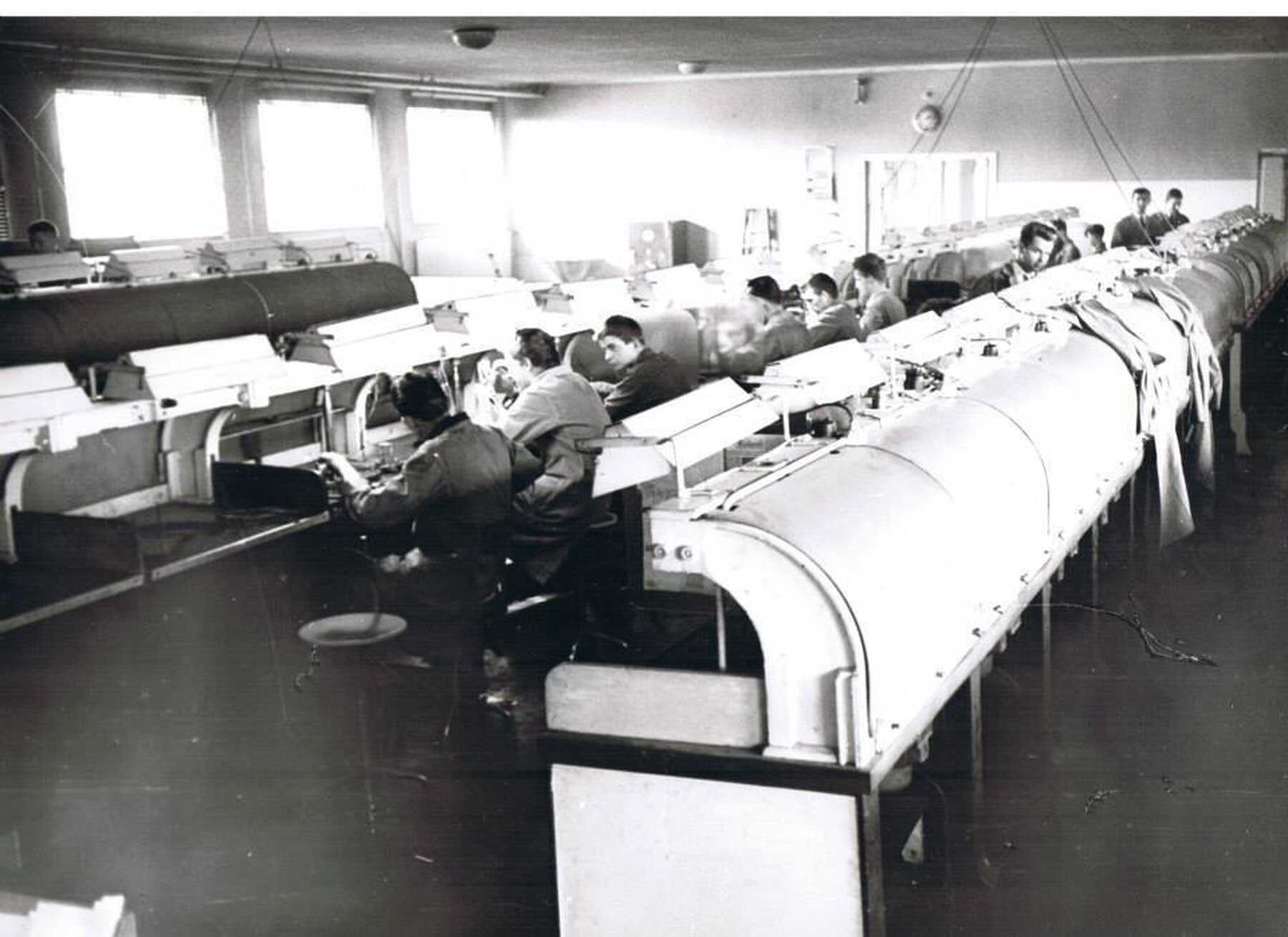
What began in 1953 with the training of a small group of diamond craftsmen gradually developed into a professional diamond polishing operation. The first generation of diamond polishers had gained valuable experience, and the traditional craftsmanship brought from Amsterdam had firmly established itself in Cuijk.The company continued to develop. Production became organised into dedicated departments, where skilled craftsmen worked at specialised diamond polishing machines.
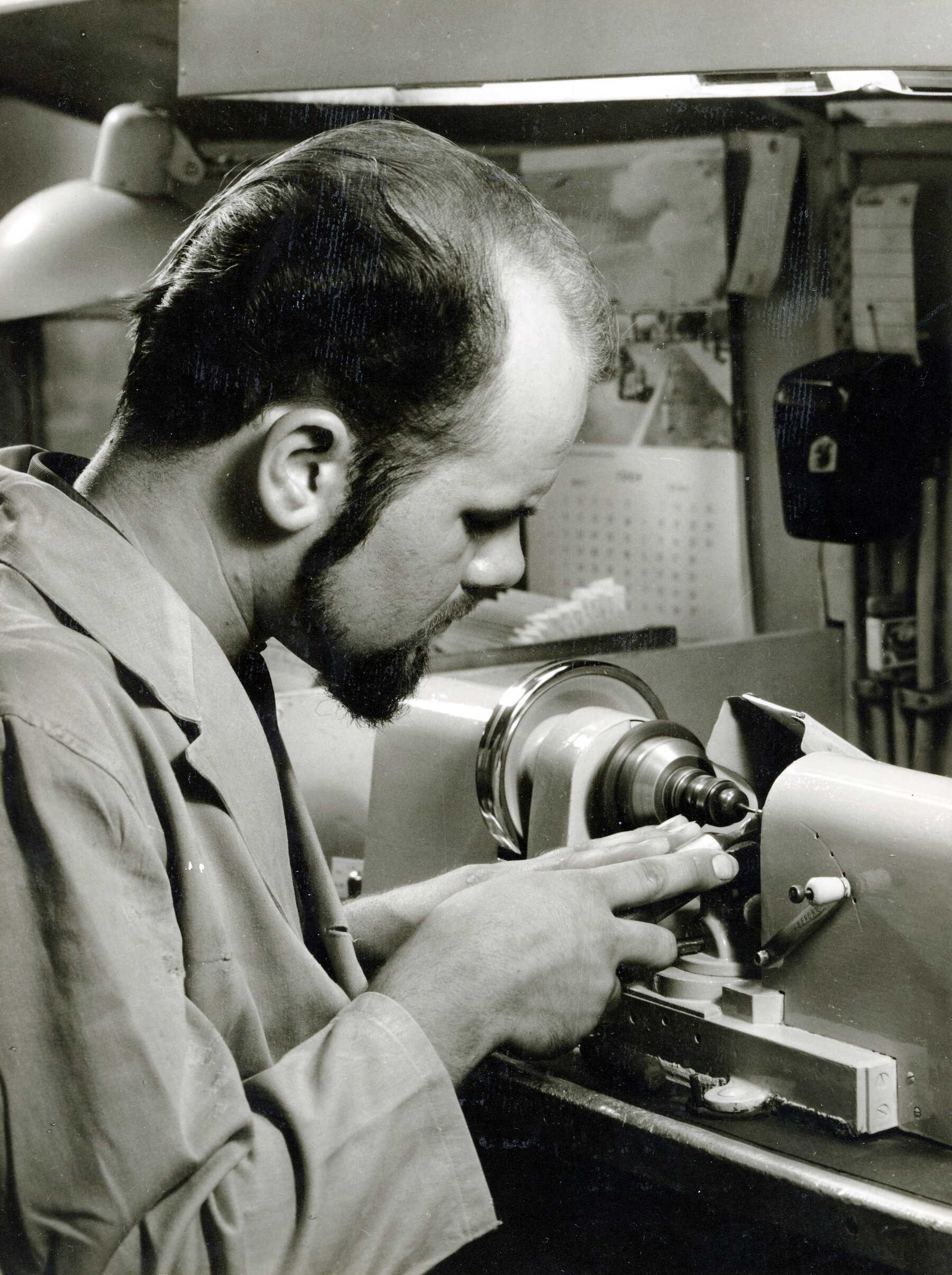
Much of the work was still performed by hand. Diamond polishing required a steady hand, a keen eye and, above all, patience. Every operation demanded exceptional precision and concentration.
Historical photographs from this period of the company's development show workshops with long rows of polishing machines and craftsmen fully focused on their delicate work. They offer a remarkable glimpse into an industry where human skill remained at the heart of production. The foundations laid in the 1950s had developed into an established diamond industry in Cuijk.
An industry in which traditional craftsmanship would pave the way for the technological innovations of the decades to come.