The Origins of the Diamond Industry in Cuijk
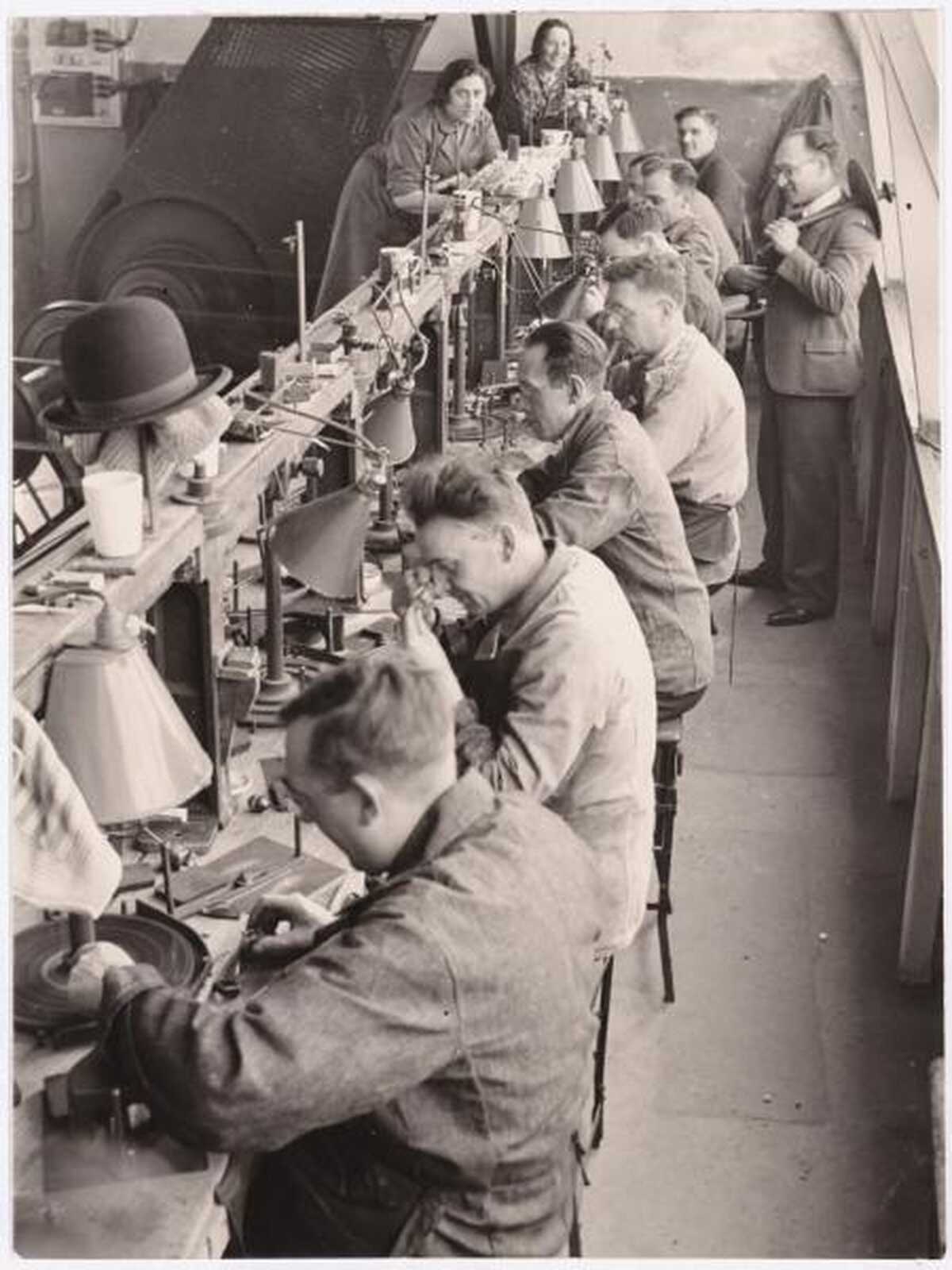
After the Second World War
For centuries, Amsterdam had been the heart of the Dutch diamond industry. Diamond polishing was a highly specialised craft, often passed down through generations. A significant proportion of its skilled craftsmen were of Jewish descent.
The Second World War had devastating consequences for this community. Thousands of Jewish diamond workers were deported, and many never returned. Amsterdam's diamond industry lost not only a substantial part of its workforce, but also generations of craftsmanship, knowledge and experience.
In the years following the war, the industry faced the difficult task of rebuilding. International competition had intensified, while the established labour structure, with its strong trade union influence, presented additional economic challenges.
These circumstances encouraged some diamond entrepreneurs to explore opportunities beyond Amsterdam.
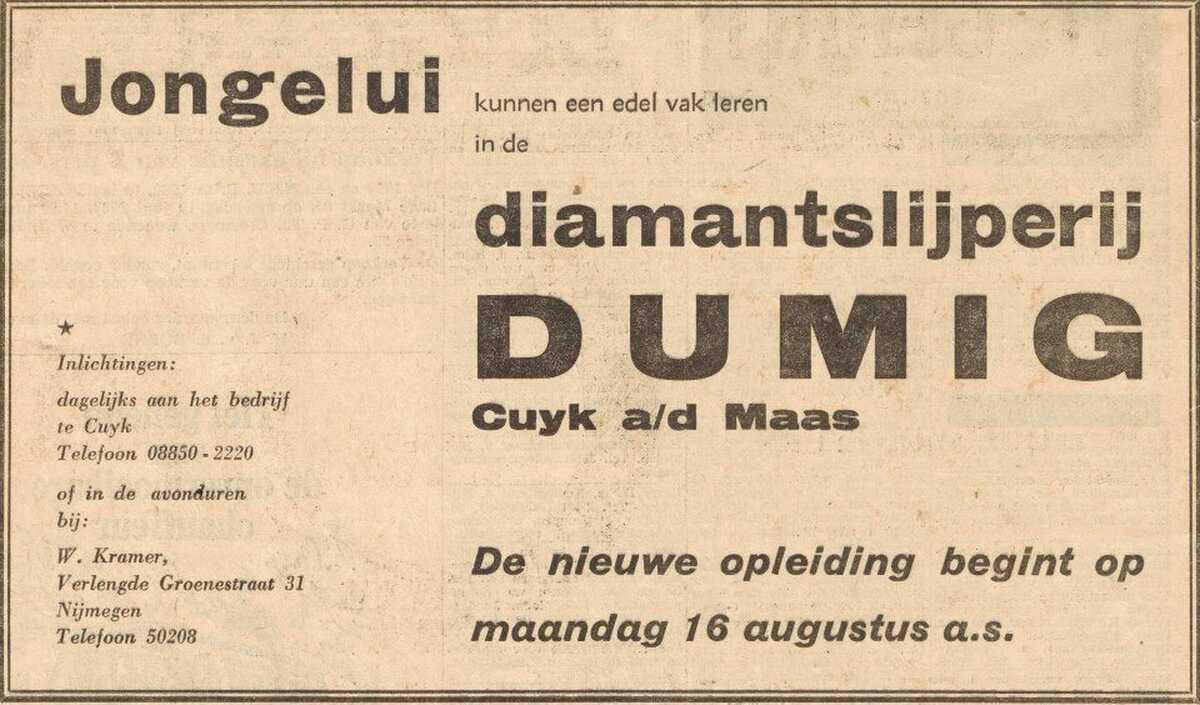
A New Beginning, 1953
The choice fell on Cuijk, a small town in the Dutch province of North Brabant, where the local authorities were actively encouraging industrial development and employment.
In 1953, the training of a new generation of diamond craftsmen began. This was a remarkable undertaking, as Cuijk had no previous tradition of diamond polishing.
An experienced master diamond polisher relocated from Amsterdam to Cuijk to teach young people the craft. Starting from scratch, they had to learn how to work with a material that demanded exceptional skill, patience and precision.
What began as a diamond polishing workshop in a small Dutch town gradually developed into an industry in which traditional craftsmanship increasingly evolved into advanced precision technology.
And so, in 1953, the foundations of the diamond industry in Cuijk were laid.
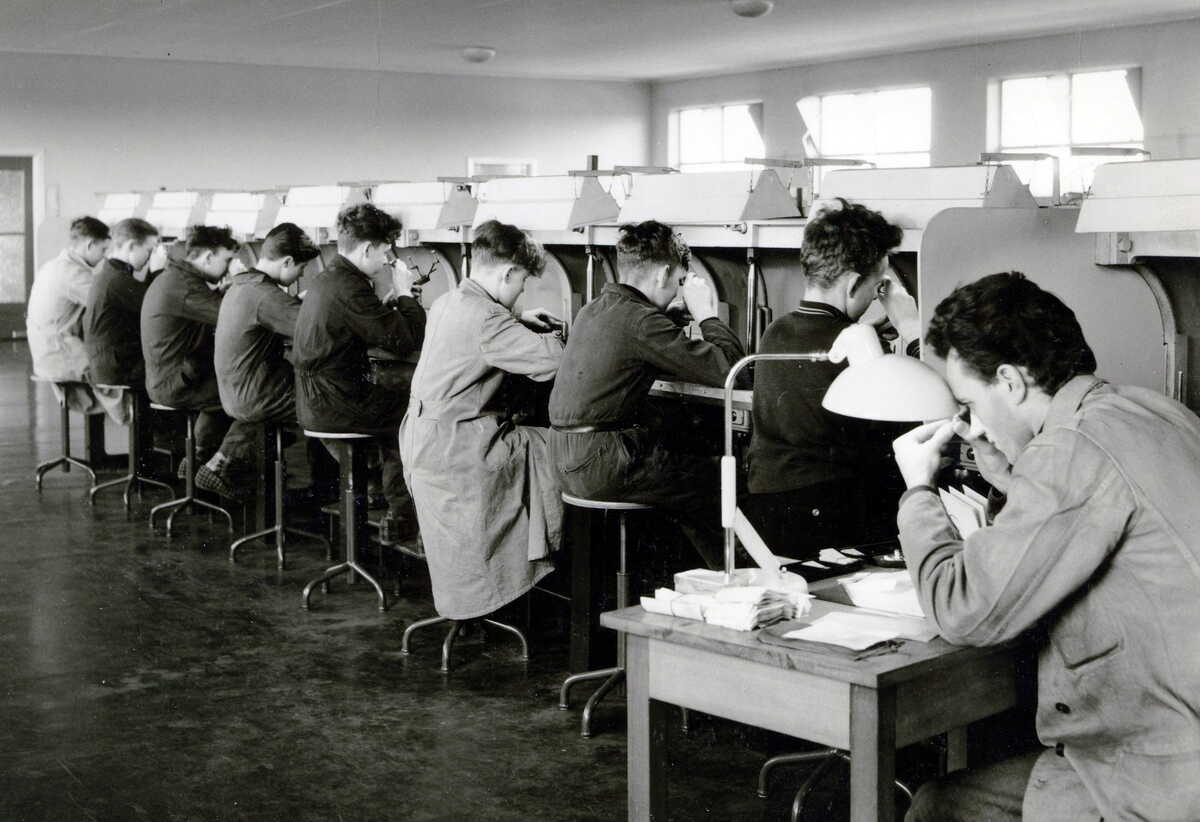
1953, A New Generation of Diamond Craftsmen
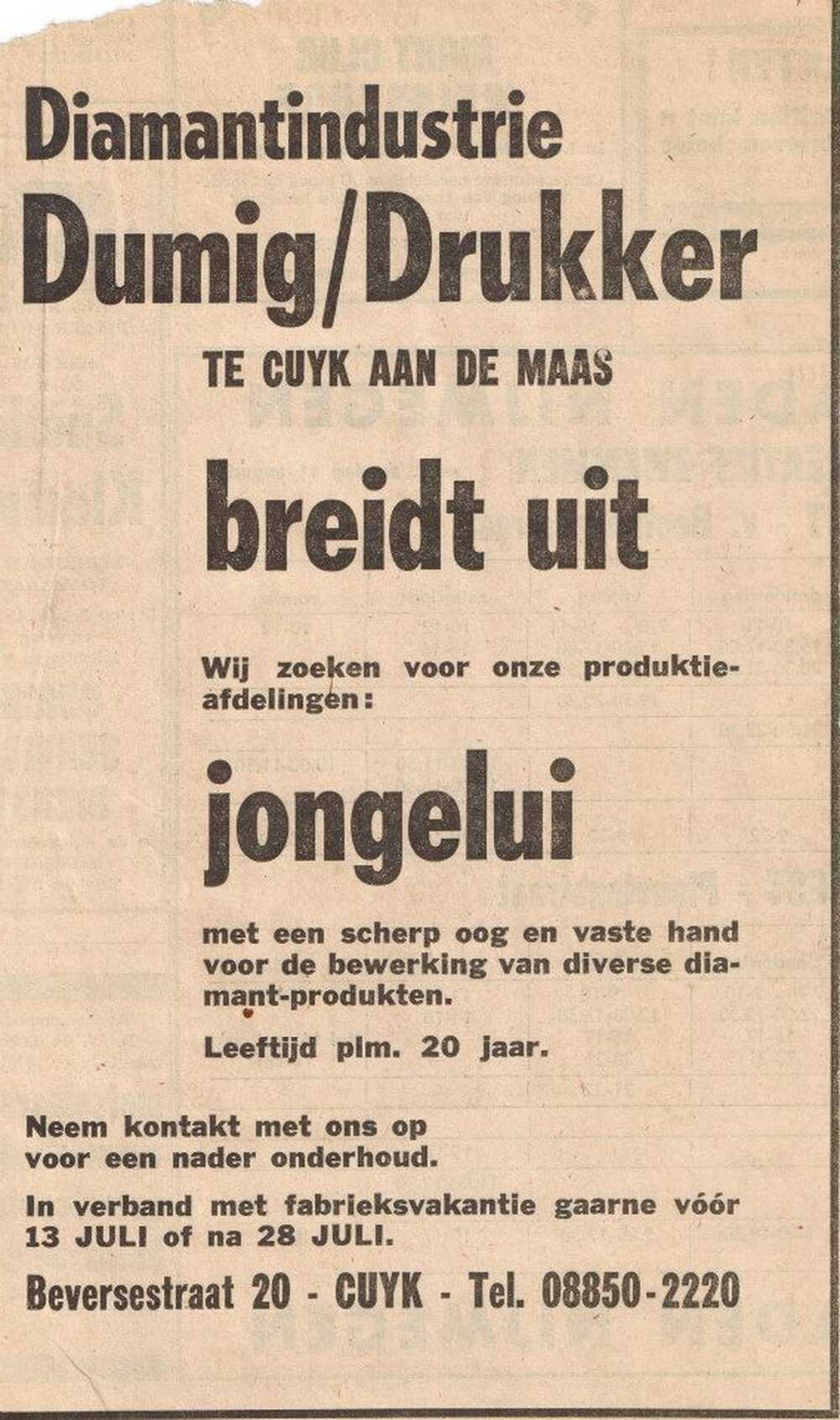
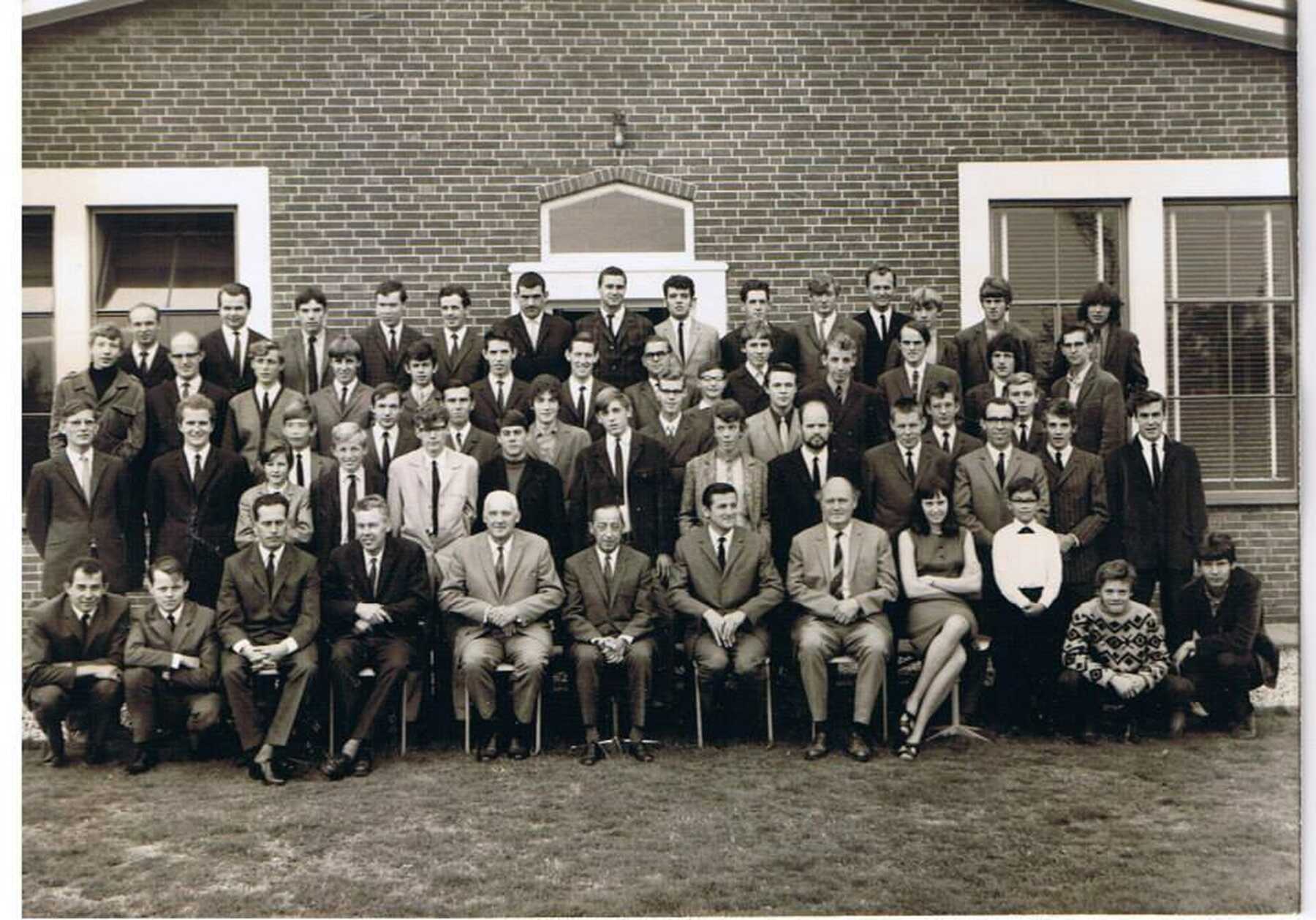
In 1953, the training of a new generation of diamond craftsmen began in Cuijk. Approximately thirty young men, many of whom had received technical training in metalworking at a school in nearby Boxmeer, were recruited to learn the art of diamond polishing. Under the guidance of an experienced master diamond polisher from Amsterdam, they were introduced to a craft that had traditionally been passed down from generation to generation.
Working with diamond required exceptional patience, precision and concentration. Every facet had to be carefully shaped and polished, using techniques that could only be mastered through extensive practice and experience. For these young craftsmen, it marked the beginning of an entirely new profession. For Cuijk, it was the first step towards establishing its own diamond industry.
A new generation was learning a centuries-old craft, far from its traditional roots in Amsterdam.
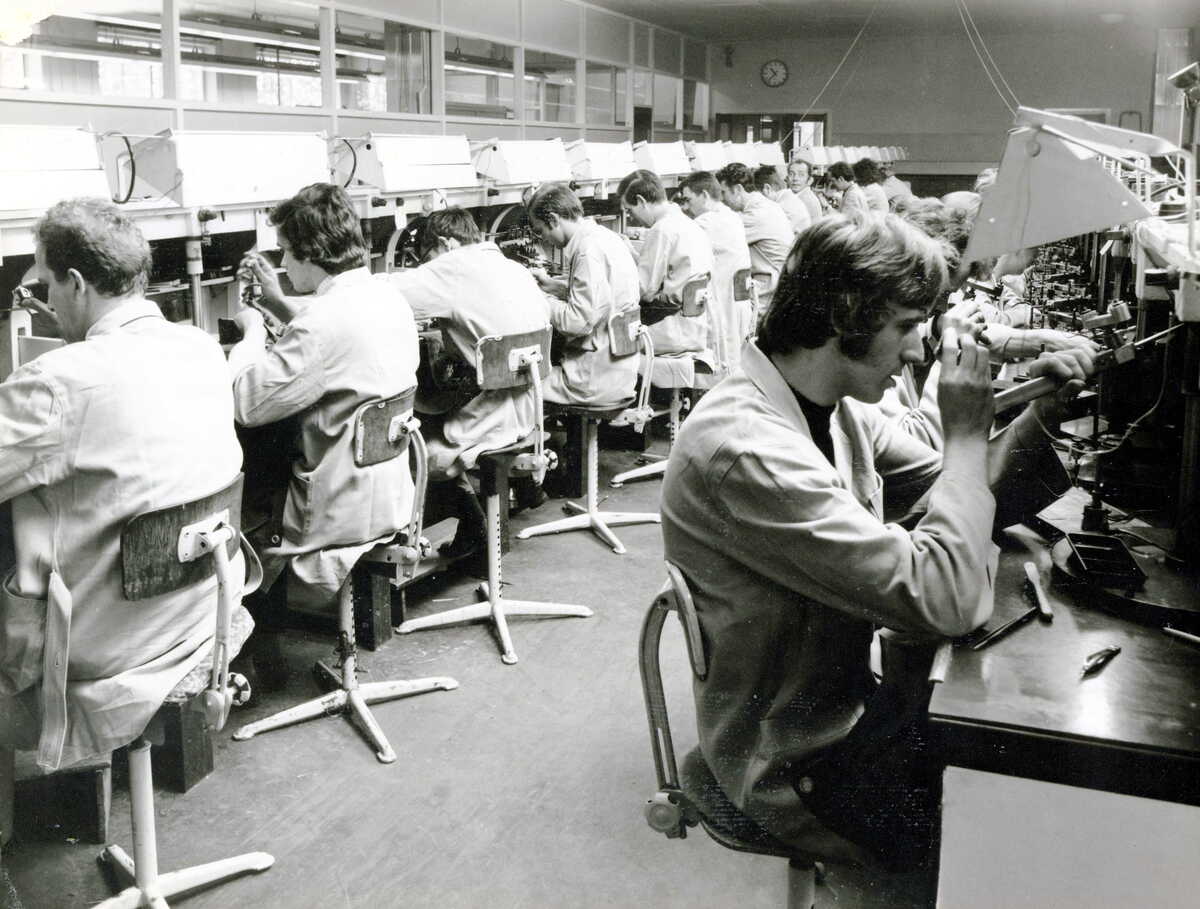
The Sixties: From Craftsmanship to Industry
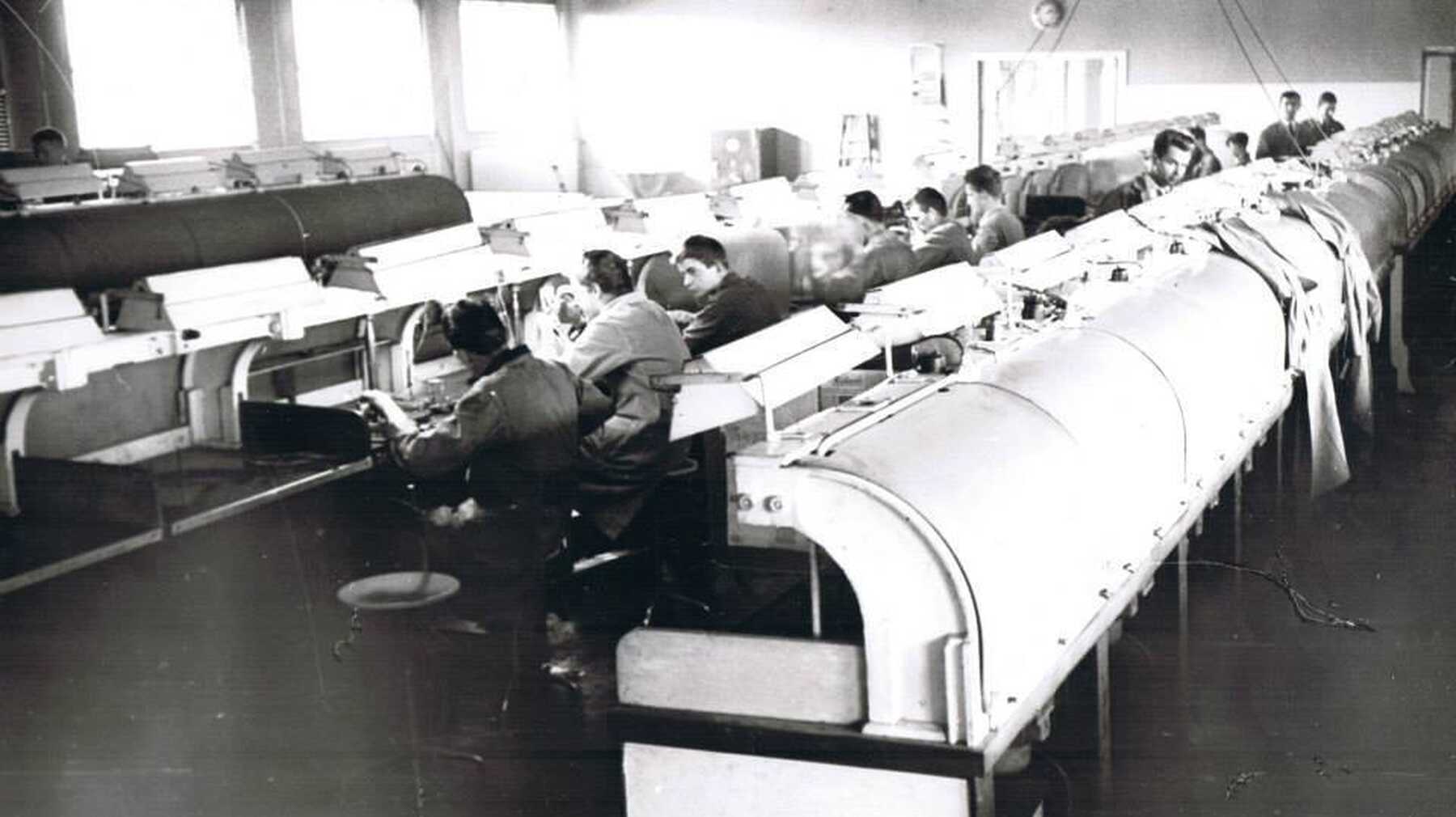
What began in 1953 with the training of a small group of diamond craftsmen gradually developed into a professional diamond polishing operation. The first generation of diamond polishers had gained valuable experience, and the traditional craftsmanship brought from Amsterdam had firmly established itself in Cuijk.The company continued to develop. Production became organised into dedicated departments, where skilled craftsmen worked at specialised diamond polishing machines.
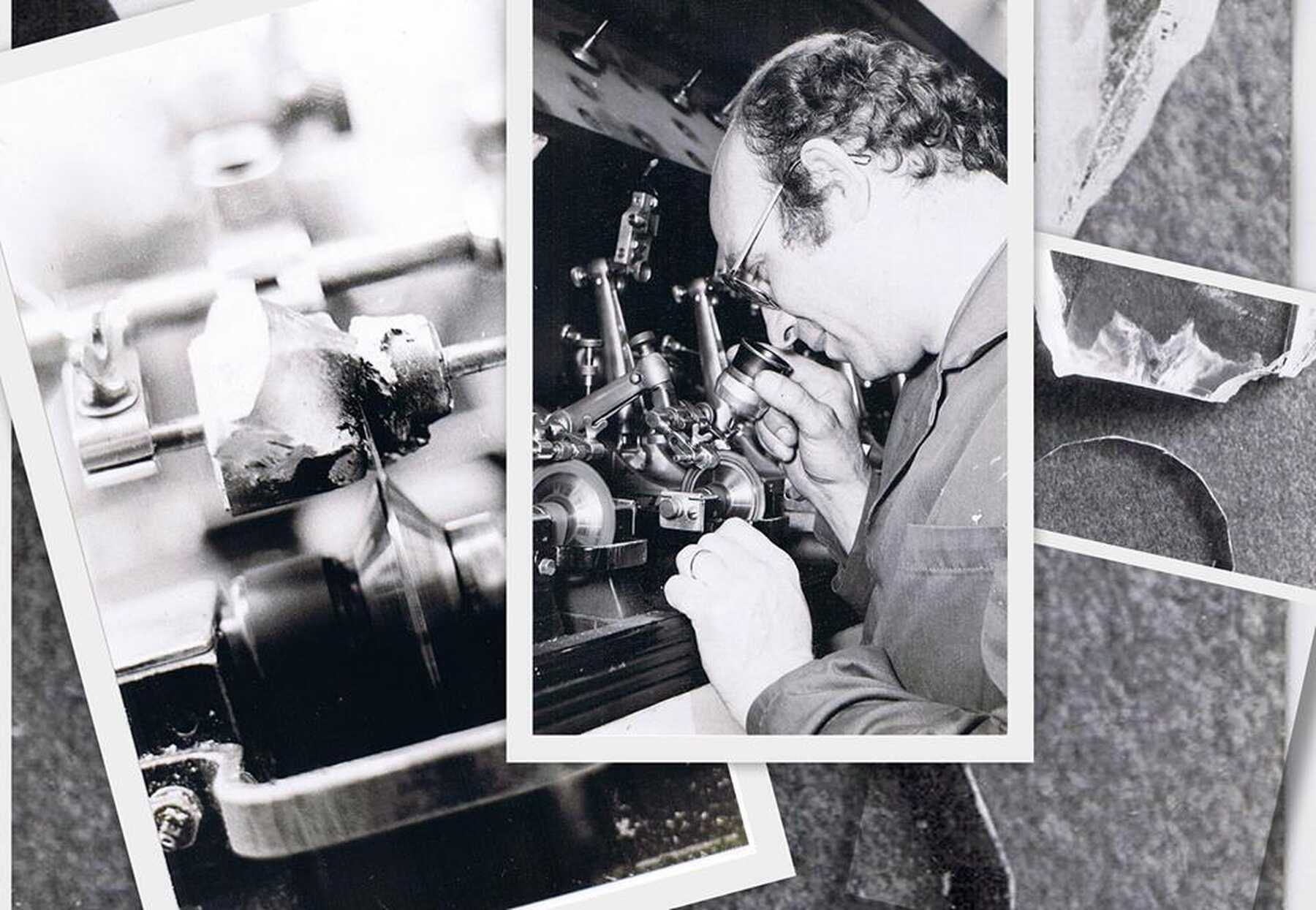
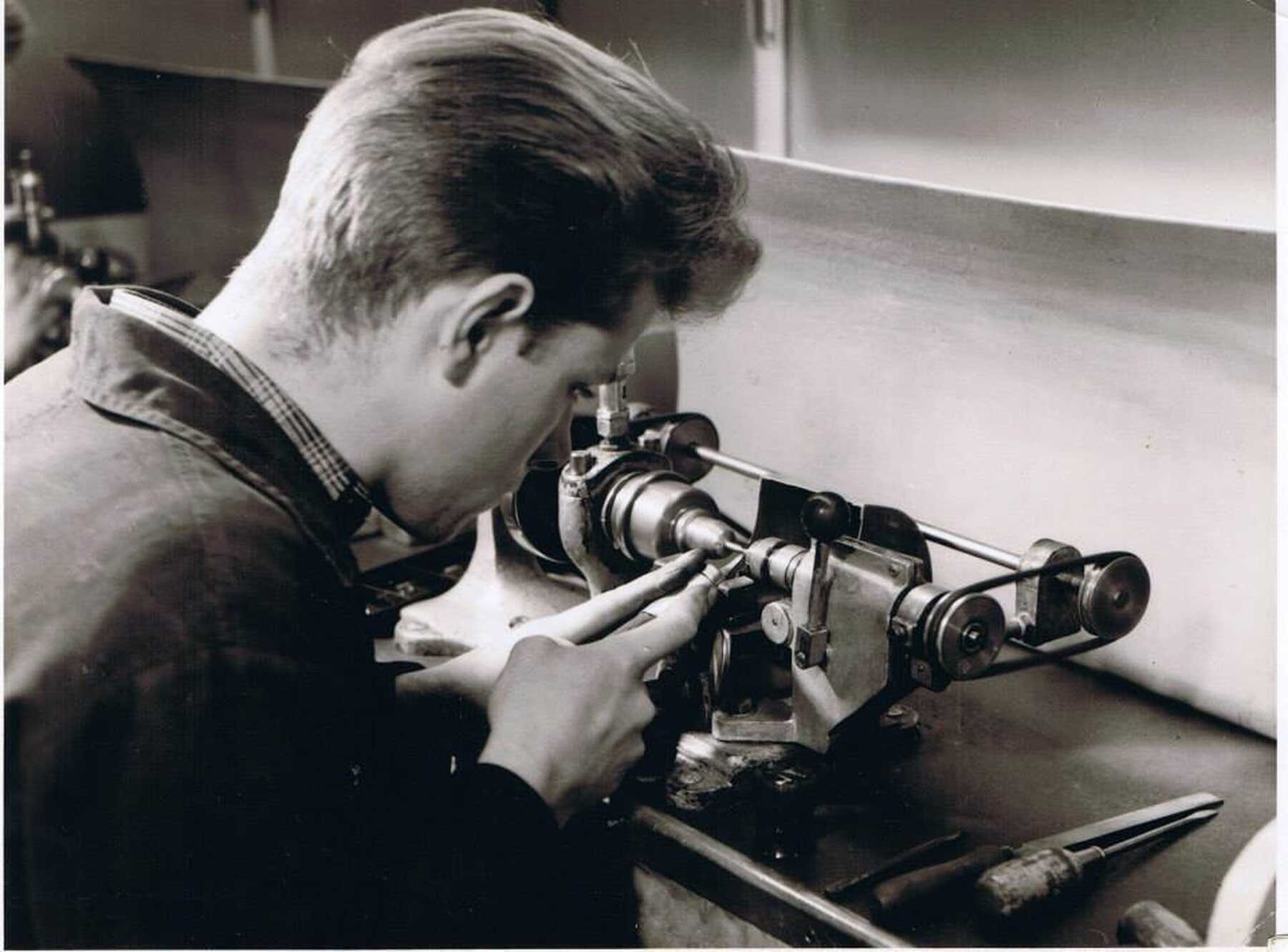
Much of the work was still performed by hand. Diamond polishing required a steady hand, a keen eye and, above all, patience. Every operation demanded exceptional precision and concentration.
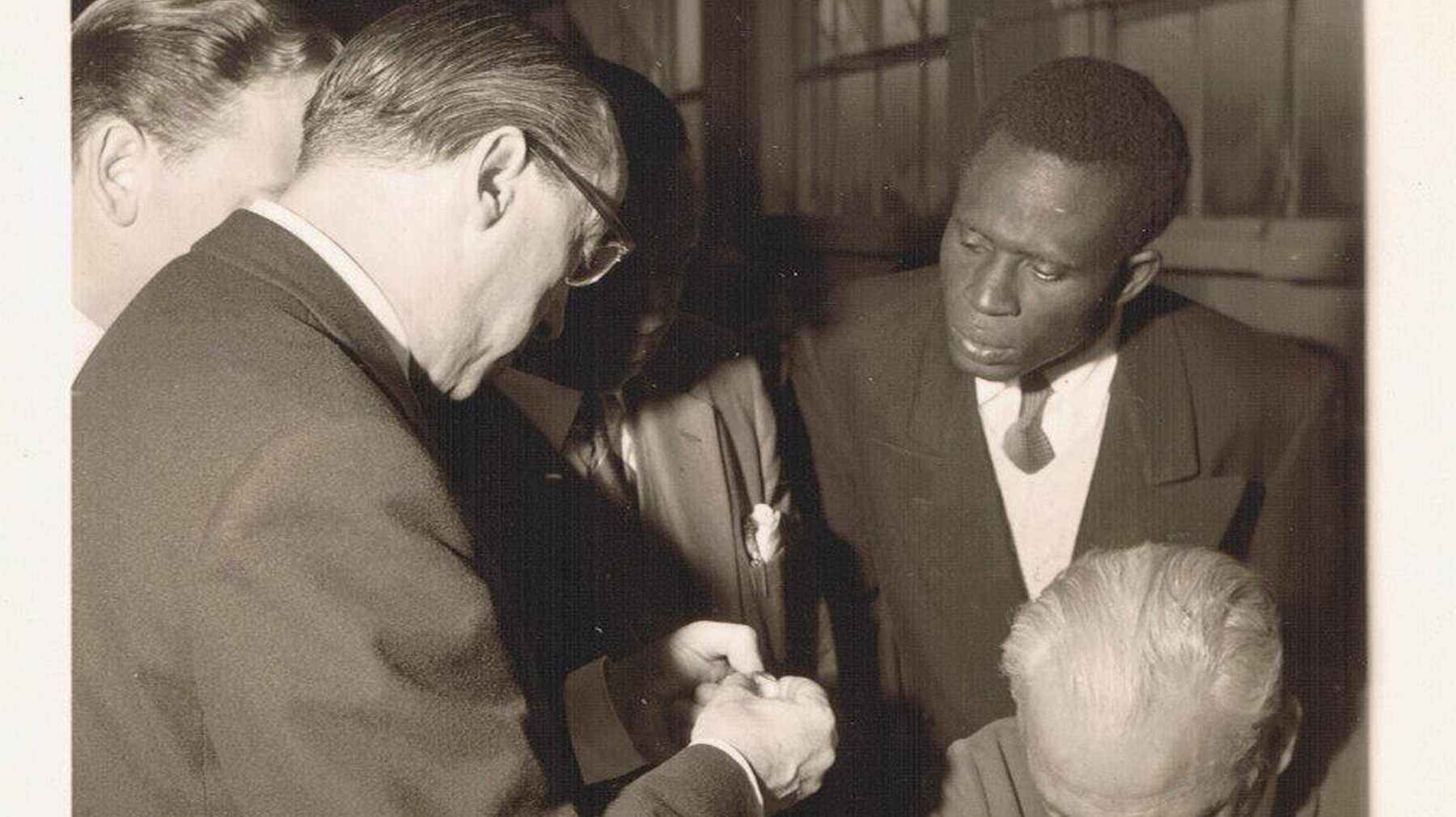
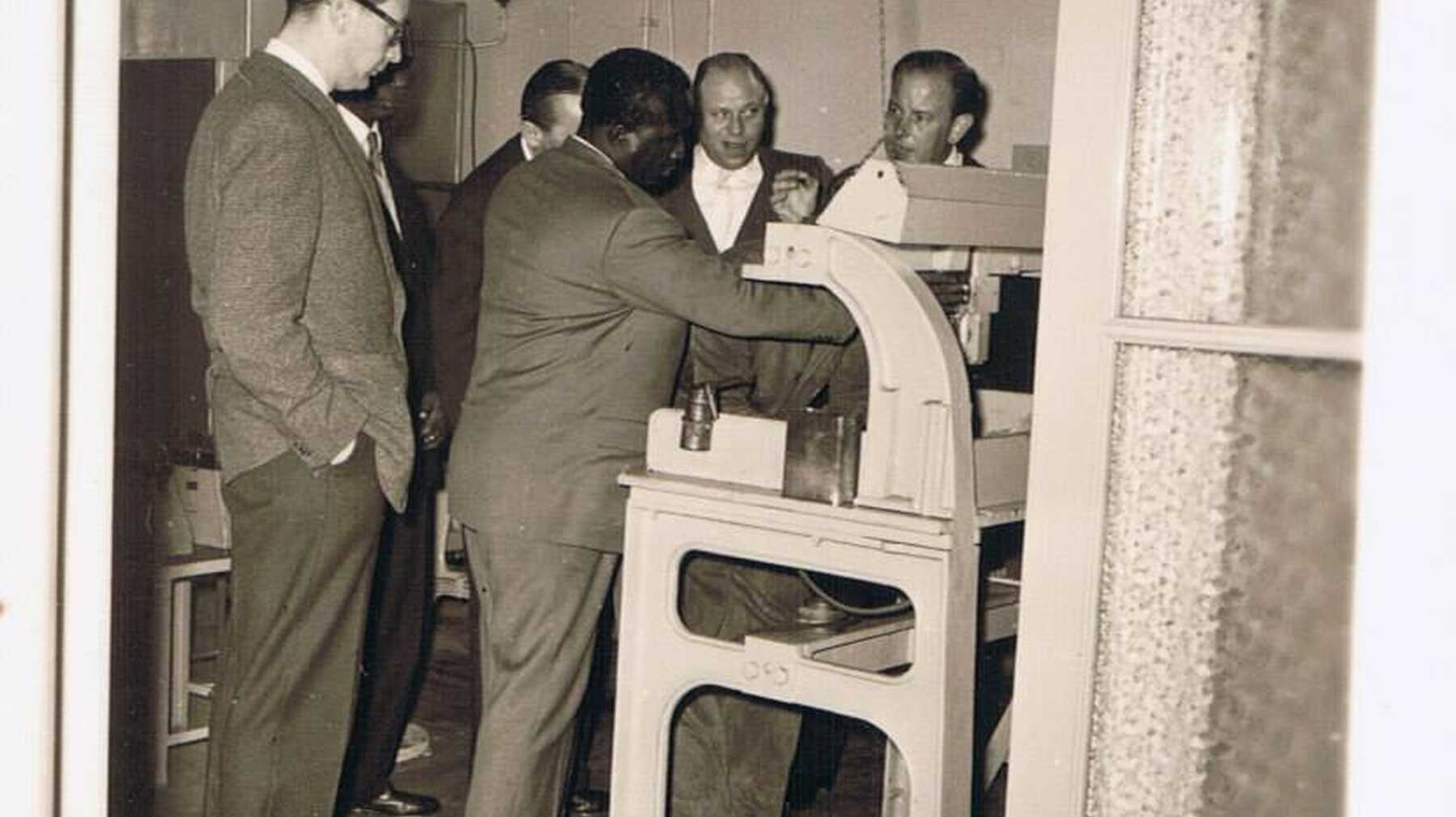
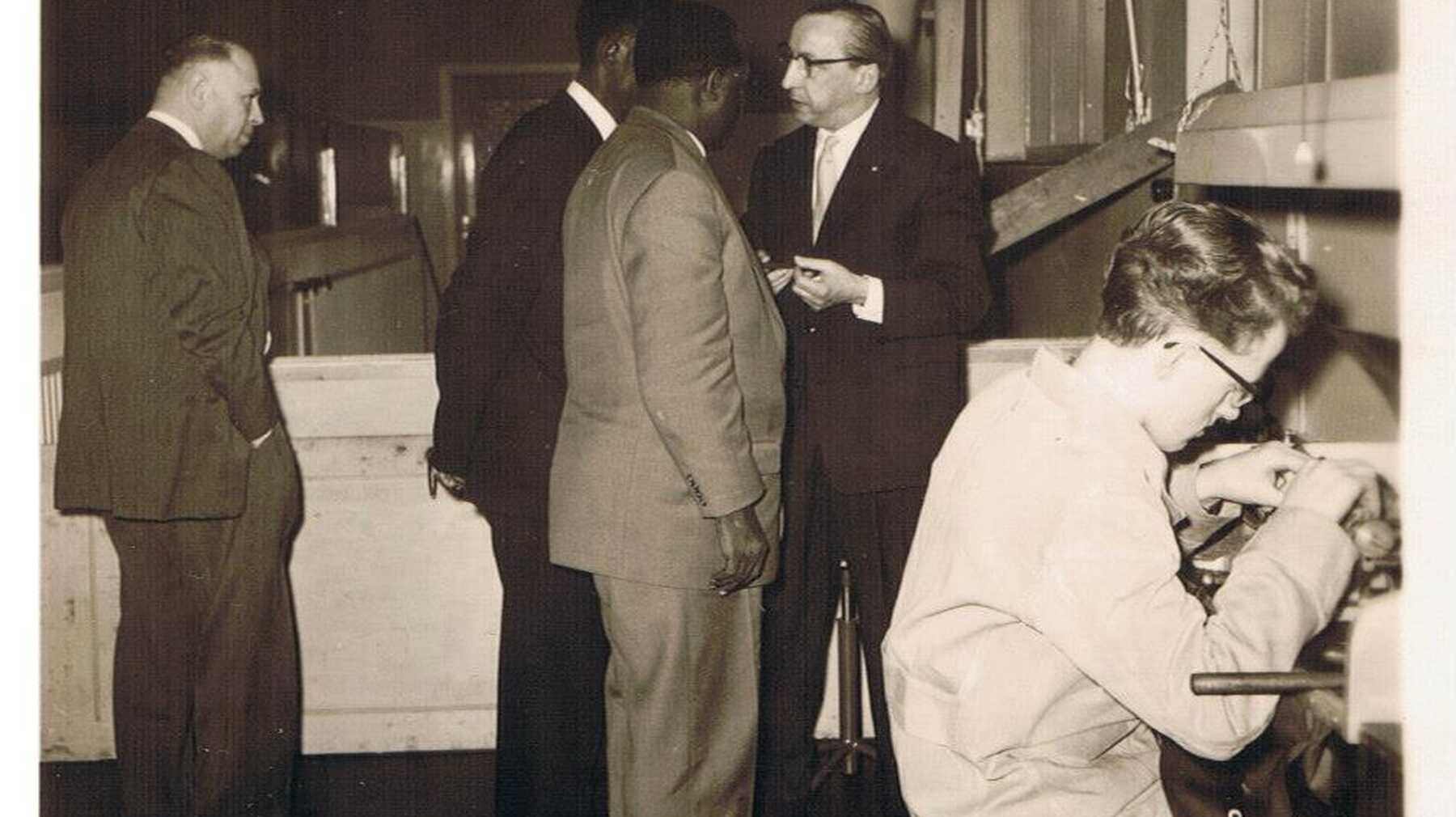
Historical photographs from this period of the company's development show workshops with long rows of polishing machines and craftsmen fully focused on their delicate work. They offer a remarkable glimpse into an industry where human skill remained at the heart of production. The foundations laid in the 1950s had developed into an established diamond industry in Cuijk.
An industry in which traditional craftsmanship would pave the way for the technological innovations of the decades to come.
The 1960s and 1970s: An Industry in Development
During the 1960s and early 1970s, the diamond polishing industry in Cuijk continued to grow. What had started with the training of a small group of young diamond craftsmen had developed into a professional operation where craftsmanship and experience remained at the heart of production.
Production became increasingly organised, with dedicated departments gradually taking shape. New employees were trained, while experienced diamond craftsmen continued to refine their skills and expertise.
Diamond polishing was still largely performed by hand. Every operation required patience, concentration and exceptional precision. The quality of the finished product depended to a great extent on the individual craftsman's skill and experience.
As the company expanded, it gained not only greater production capacity but also new knowledge and technical capabilities.
Gradually, an environment emerged in which traditional craftsmanship and technological development increasingly complemented one another. This laid the foundation for an important next step: the development of more advanced industrial applications of diamond.
By this time, Cuijk's diamond industry had become much more than a traditional polishing workshop. The knowledge and expertise developed here would pave the way for a new era of technological innovation.
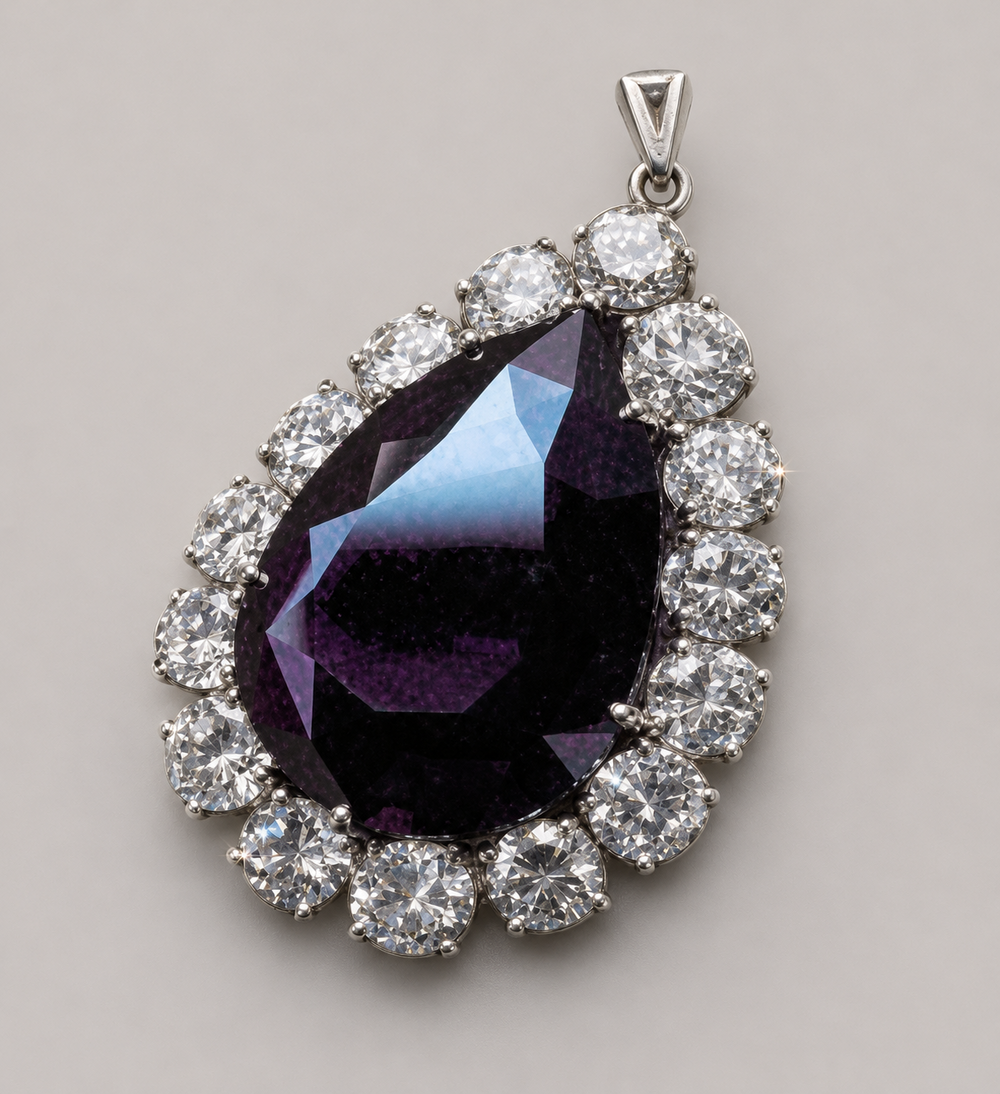
1972: The Story of De Amsterdam, an Extraordinary Black Diamond
In 1972, Drukker & Zonen in Cuijk polished an extraordinary black diamond that had originally been intended for industrial applications.
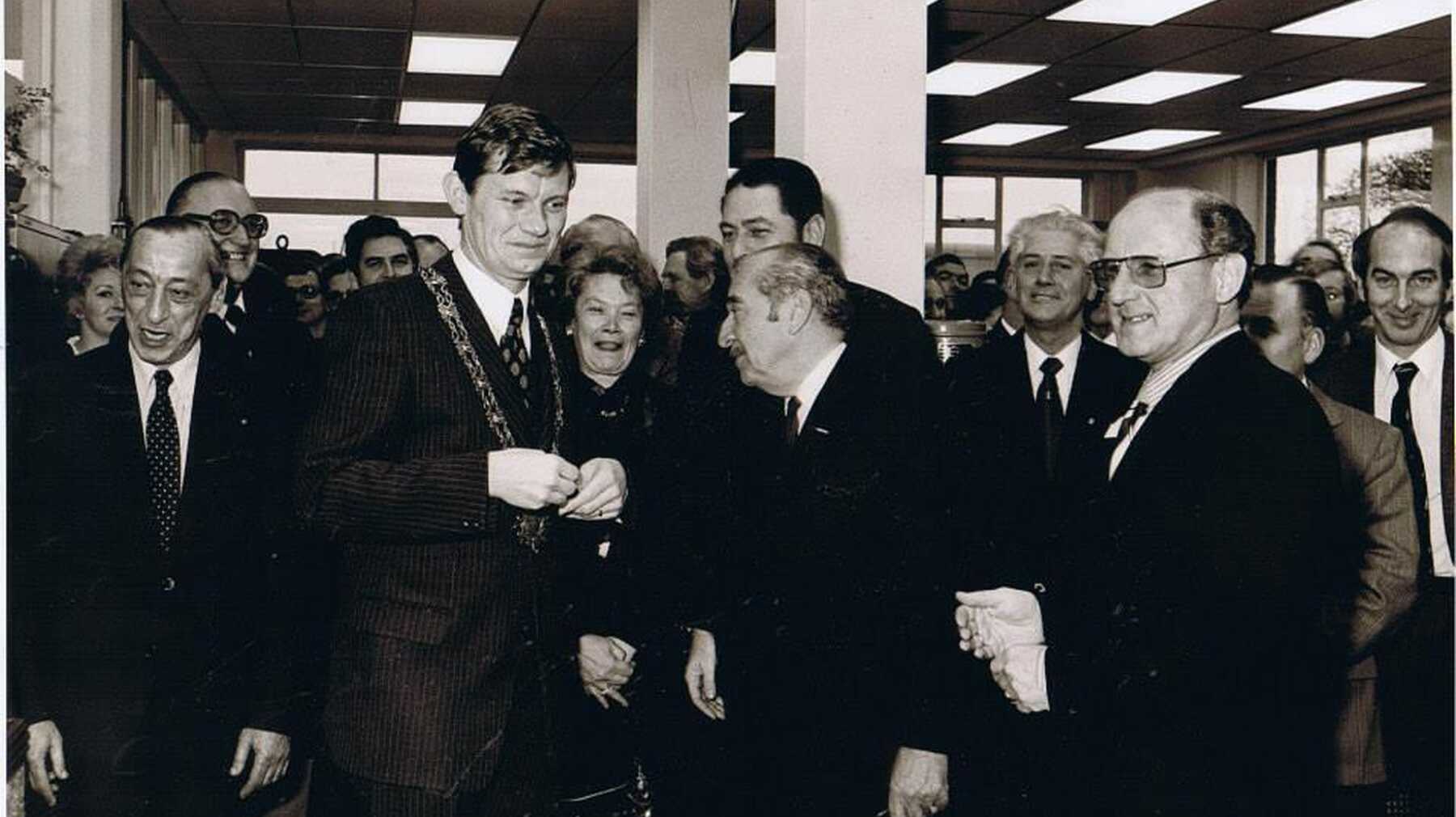
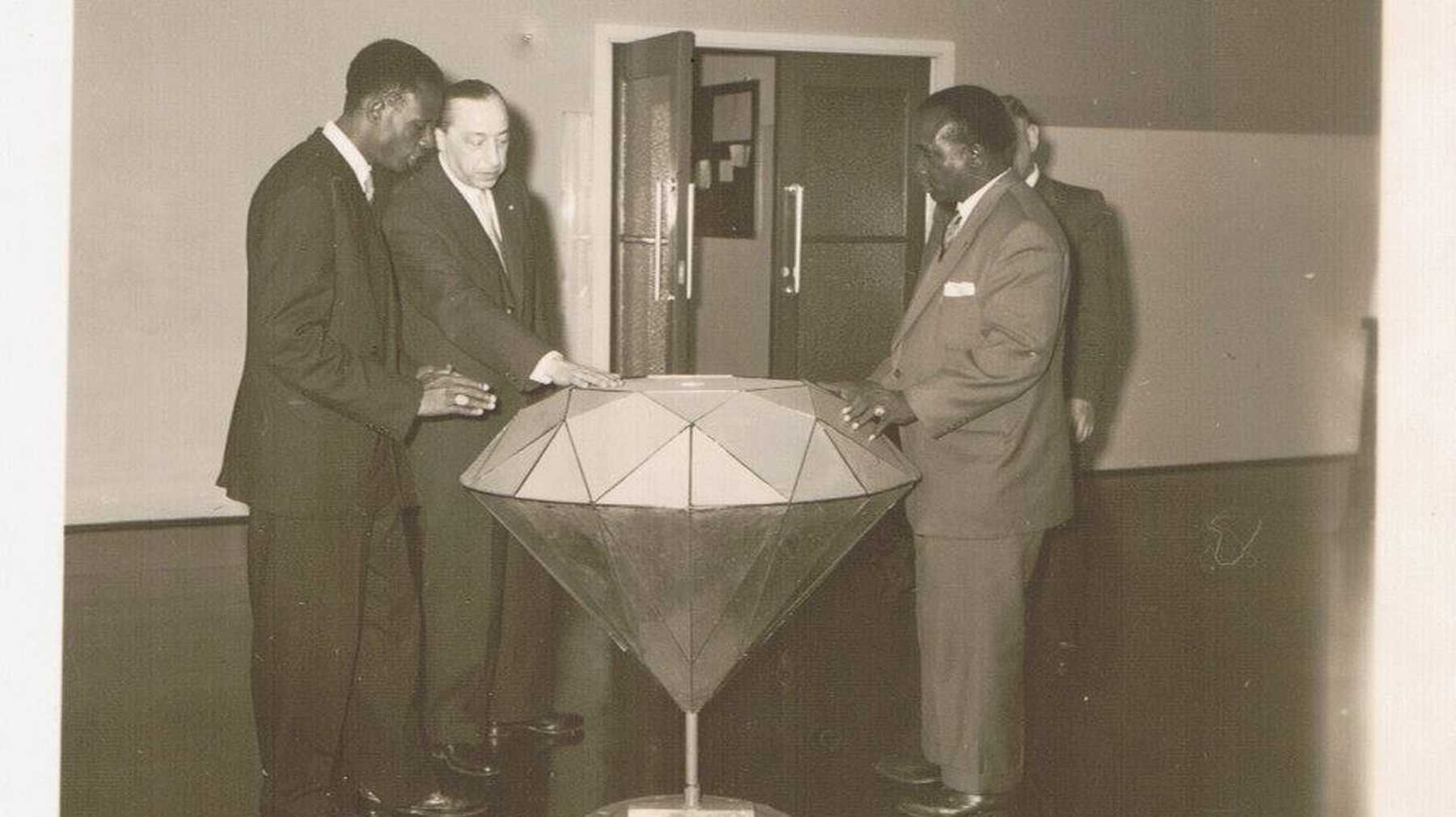
After approximately three months of intensive polishing, the 55.85 carat rough diamond was transformed into a remarkable pear shaped gemstone weighing 33.74 carats, featuring no fewer than 145 facets. In February 1973, the diamond was officially presented and named De Amsterdam by the wife of Amsterdam's mayor, Ivo Samkalden. The stone was subsequently exhibited in connection with the celebrations marking the city's 700th anniversary in 1975.
It was one of the first remarkable achievements through which Drukker & Zonen brought the exceptional craftsmanship of Cuijk's diamond polishers to international attention. This achievement marked the beginning of a series of innovative projects that would continue to push the boundaries of diamond processing.
What began as traditional diamond polishing gradually evolved into advanced precision technology, establishing Cuijk's distinctive position within the international diamond industry.
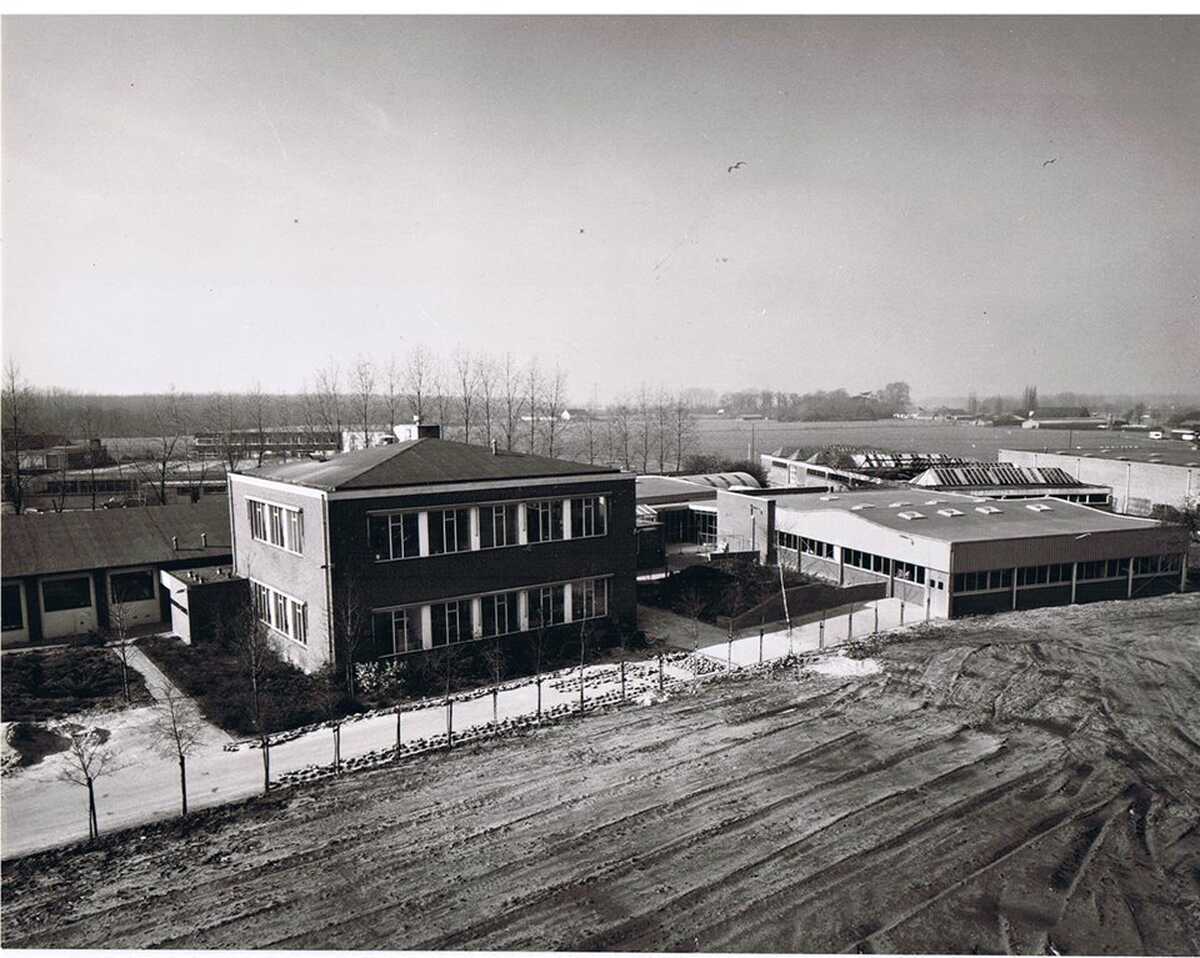
1974: A New Milestone in Cuijk’s Diamond History
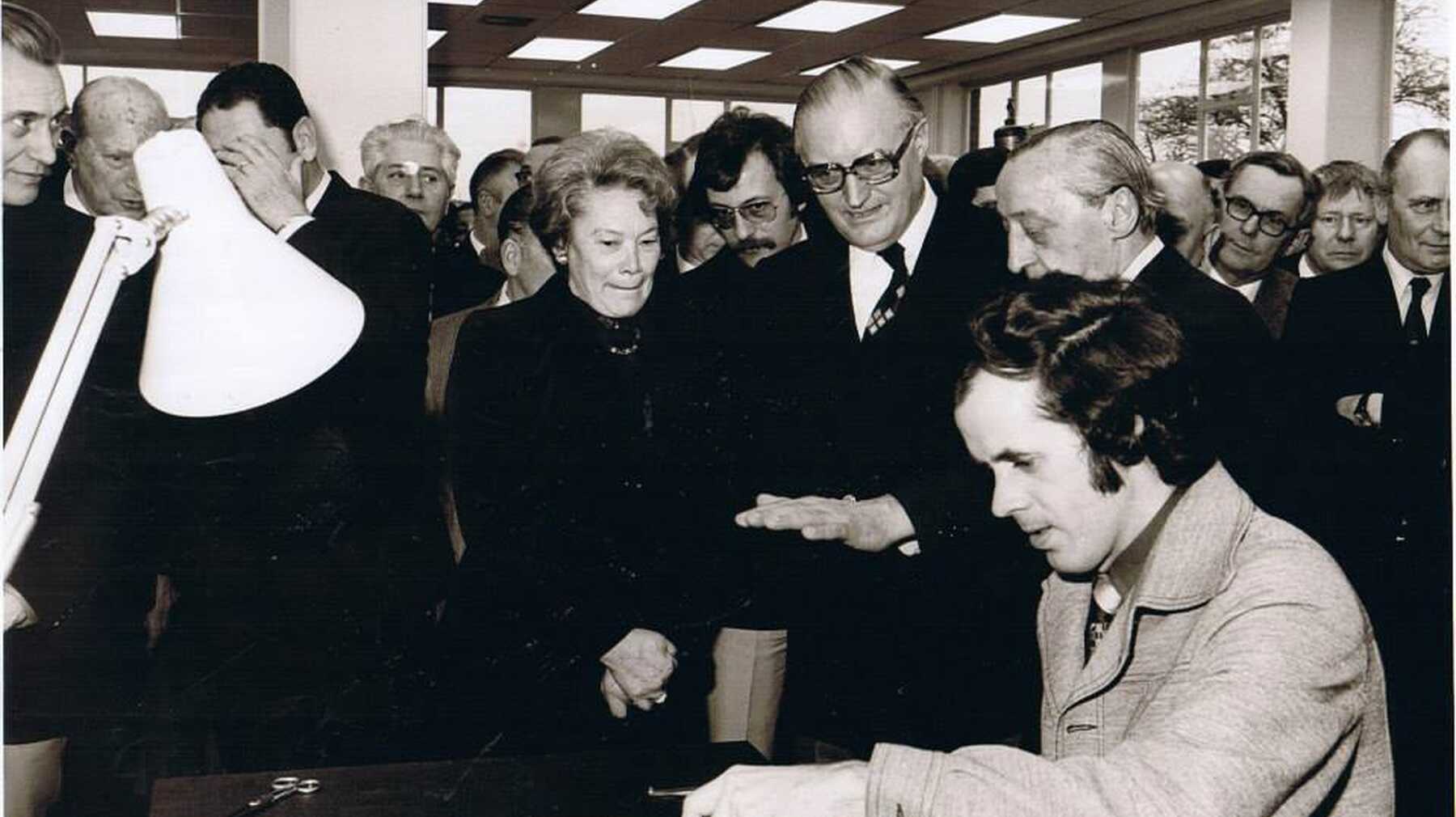
What began in 1953 as a modest diamond polishing workshop had, just over twenty years later, grown into a well-established industrial enterprise.In 1974, another important milestone was reached with the opening of a new company complex. This historical photograph beautifully illustrates that transformation. On the left, part of the original building can still be seen, housing the offices and the traditional diamond polishing workshop.
At the centre stands the new main building, home to the Research & Development departments. Here, the development of new techniques and innovative diamond applications was given increasing prominence. On the right is the brand-new diamond sawing facility, representing a significant expansion of the company's production capabilities.
The combination of traditional craftsmanship, specialised manufacturing, and in-house research and development laid the foundation for a new generation of diamond technology.
The new facilities symbolised much more than the company's growth. They reflected Cuijk's transformation from a traditional diamond polishing centre into a hub where technological innovation would play an increasingly important role.
From Gemstones to Industrial Precision Technology
The opening of the new company complex in 1974 marked the beginning of a new era for the diamond industry in Cuijk. The traditional gemstone industry was facing increasing competition from countries with significantly lower labour costs. The future no longer lay solely in polishing diamonds for their beauty, but increasingly in exploiting their exceptional technical properties.
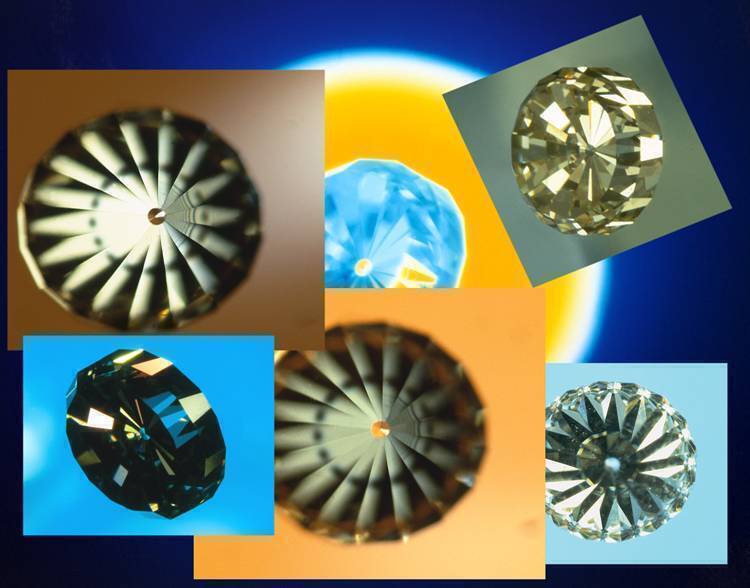
At Drukker & Zonen, attention therefore shifted towards the development of industrial diamond products.One of the important new product groups was diamond anvils. These precisely polished diamonds, whose shape still closely resembled that of traditional brilliant cut gemstones, were used in scientific research under extremely high pressure. Thanks to their exceptional hardness and optical transparency, researchers could study materials under conditions that would otherwise be difficult to achieve. New applications also emerged in other fields. Specialised diamond surgical blades were developed, primarily for use in eye surgery. Their exceptional sharpness enabled ophthalmic surgeons to make extremely fine and precise incisions. The company also developed specialised diamond tools for ultra precision turning and milling, as well as cleavers for accurately cleaving optical fibres.
One of the most technically demanding developments, however, was the production of microscopic diamond cutting tools used to engrave video discs.These tools required an extraordinary level of precision. Their dimensions were so small that not only the polishing techniques, but also the machinery and measurement methods had to be pushed to their limits. Perhaps the best illustration of their incredibly small size was the way they were packaged. Inside the small box in which the cutting tool was delivered, a tiny circle had been drawn. Somewhere within that circle lay the tool. That was where the customer had to search for the almost invisible product.
The development of these diverse products demonstrated how traditional diamond craftsmanship in Cuijk was increasingly being combined with scientific research and advanced technology. Applications became more specialised, and the technical challenges grew ever greater. What had begun as the polishing of gemstones had evolved into the manufacture of precision components for some of the most demanding applications. This evolution would eventually lead to one of the most remarkable projects in the history of Cuijk's diamond industry.
A project that would not only push the boundaries of diamond processing, but would also send a component manufactured in Cuijk beyond Earth itself.
1975–1978: From Cuijk to Venus
An Extraordinary Diamond Window for NASA
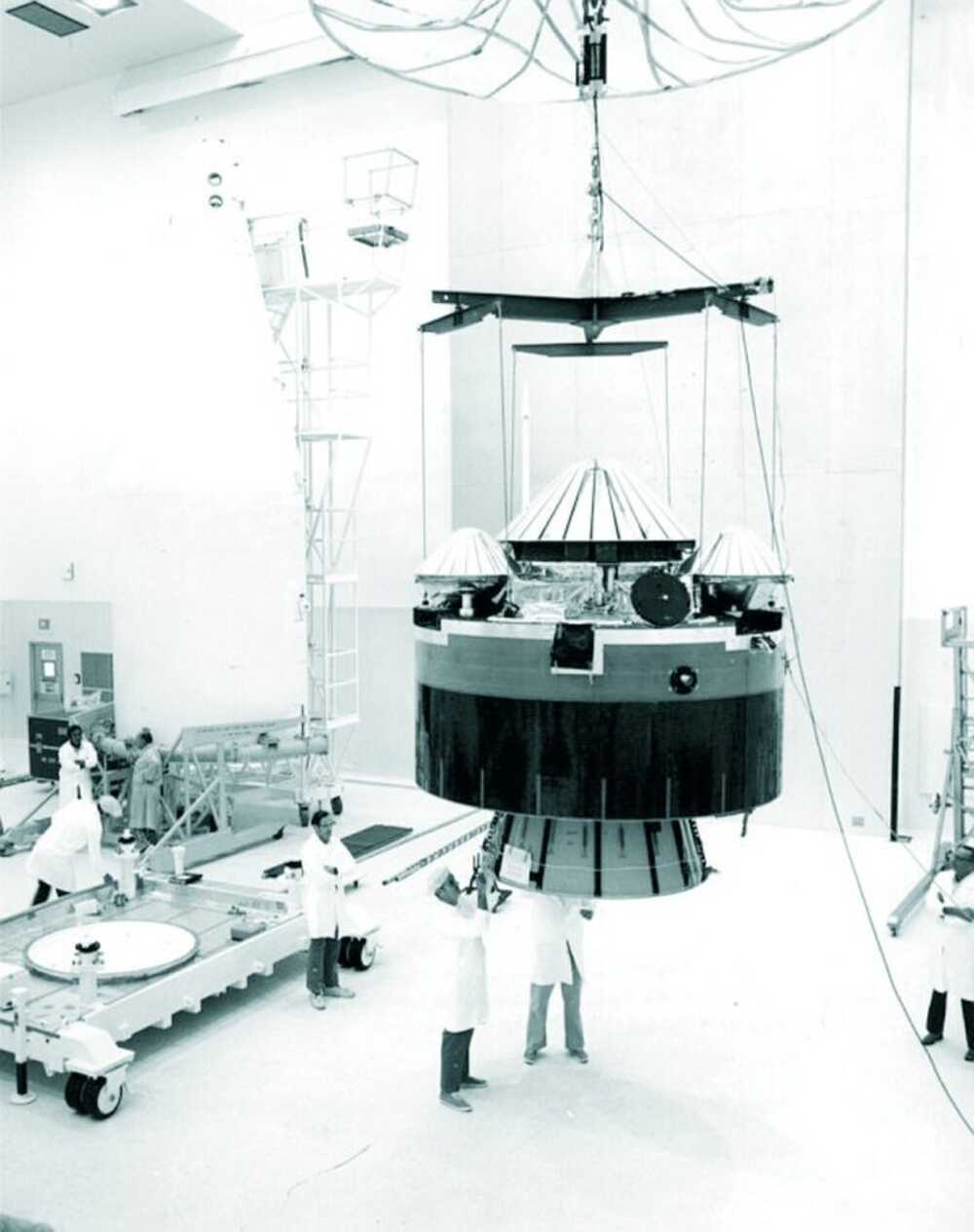
In the 1970s, the diamond industry in Cuijk reached a remarkable milestone. What had once begun with the polishing of gemstones led to the manufacture of a highly advanced technical component for the American space agency NASA. For its Pioneer Venus mission, NASA required a material capable of withstanding the extreme conditions in the atmosphere of Venus.The challenge was enormous. The material had to withstand exceptionally high temperatures, immense pressure and a chemically aggressive environment. At the same time, it needed to transmit infrared radiation, allowing scientific instruments to perform measurements during their descent towards the planet. The solution was found in diamond.
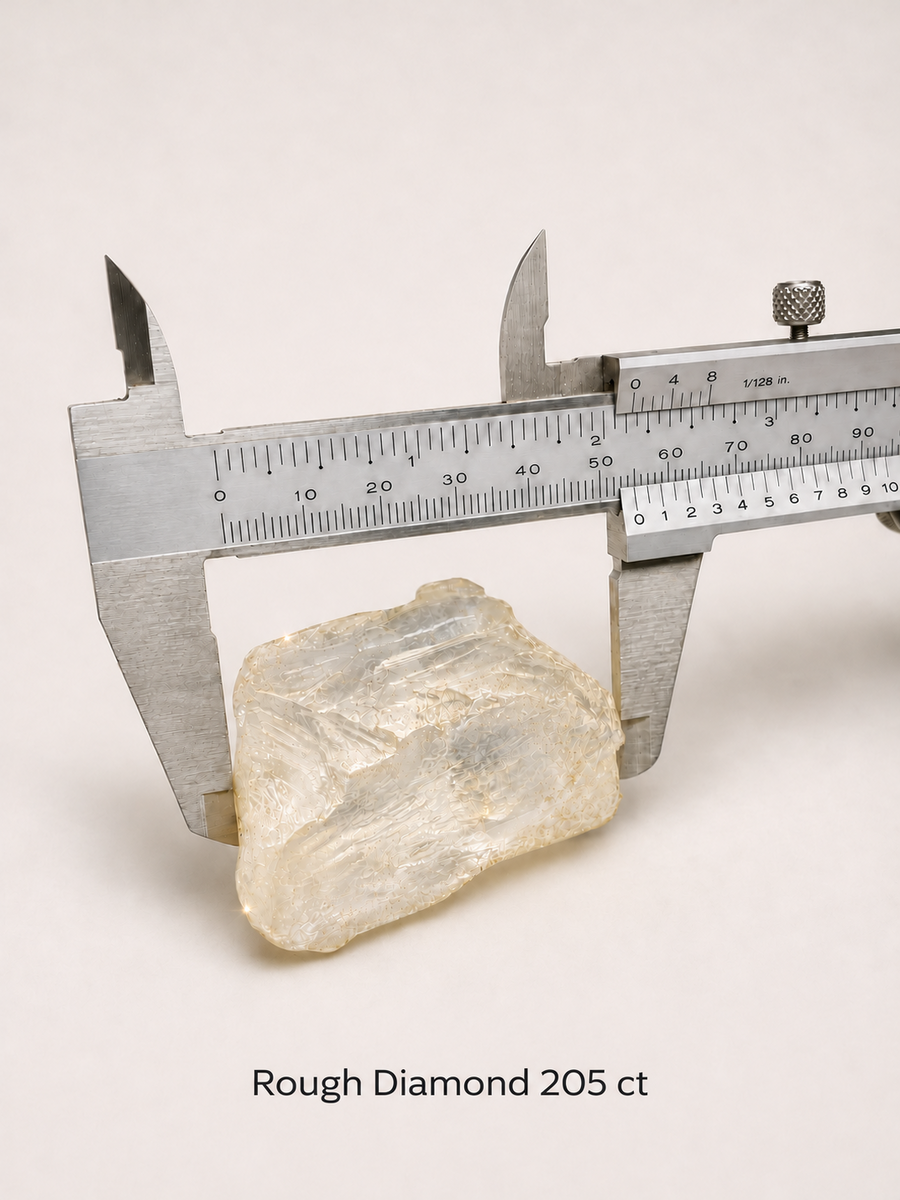
An exceptional natural diamond weighing 205.4 carats was selected for the project. It was a remarkably pure Type IIa diamond, whose unique optical properties and extreme durability made it suitable for NASA's demanding requirements.
Around 1975, Drukker & Zonen in Cuijk began manufacturing the diamond optical window. The rough diamond was processed with exceptional precision into a component measuring approximately 18.2 millimetres in diameter and just 2.8 millimetres thick. Cutting the diamond alone took more than three months. Manufacturing such a window required extraordinary craftsmanship and highly precise processing techniques. Two diamond windows were produced for the mission: one intended for the spaceflight and a second kept as a spare.
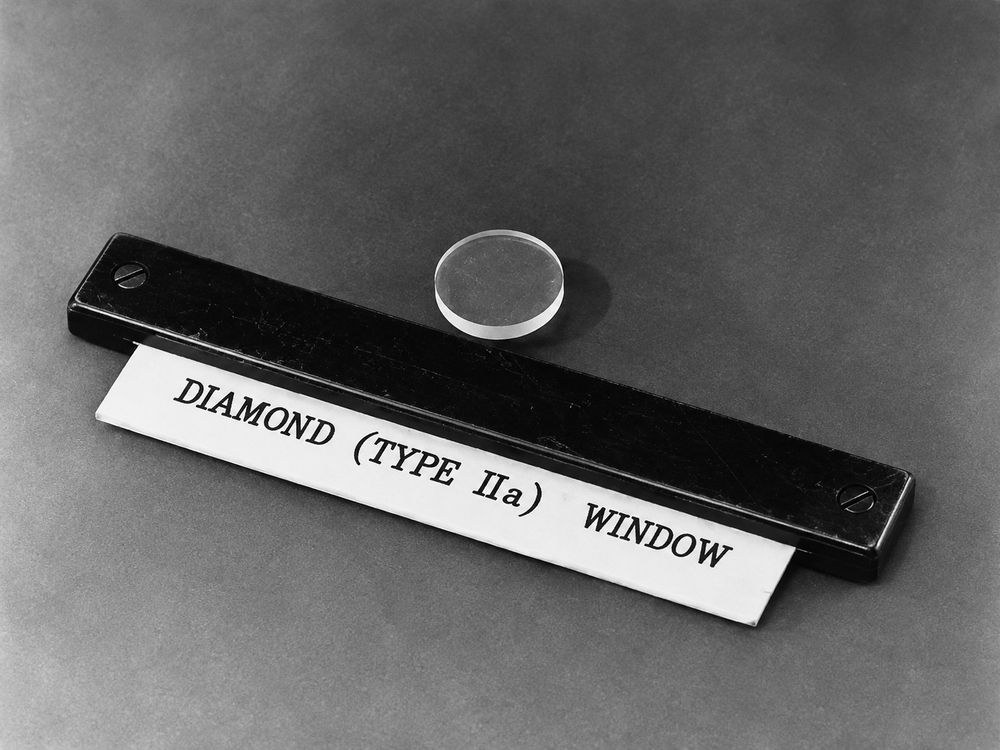
The finished diamond window was incorporated into an infrared radiometer aboard the largest atmospheric probe of NASA's Pioneer Venus mission. This instrument enabled scientists to measure thermal radiation during the descent and gain a better understanding of the atmosphere of Venus. On August 8, 1978, the Pioneer Venus Multiprobe spacecraft was launched. After travelling millions of kilometres through space, the probes reached Venus on December 9 of that same year.
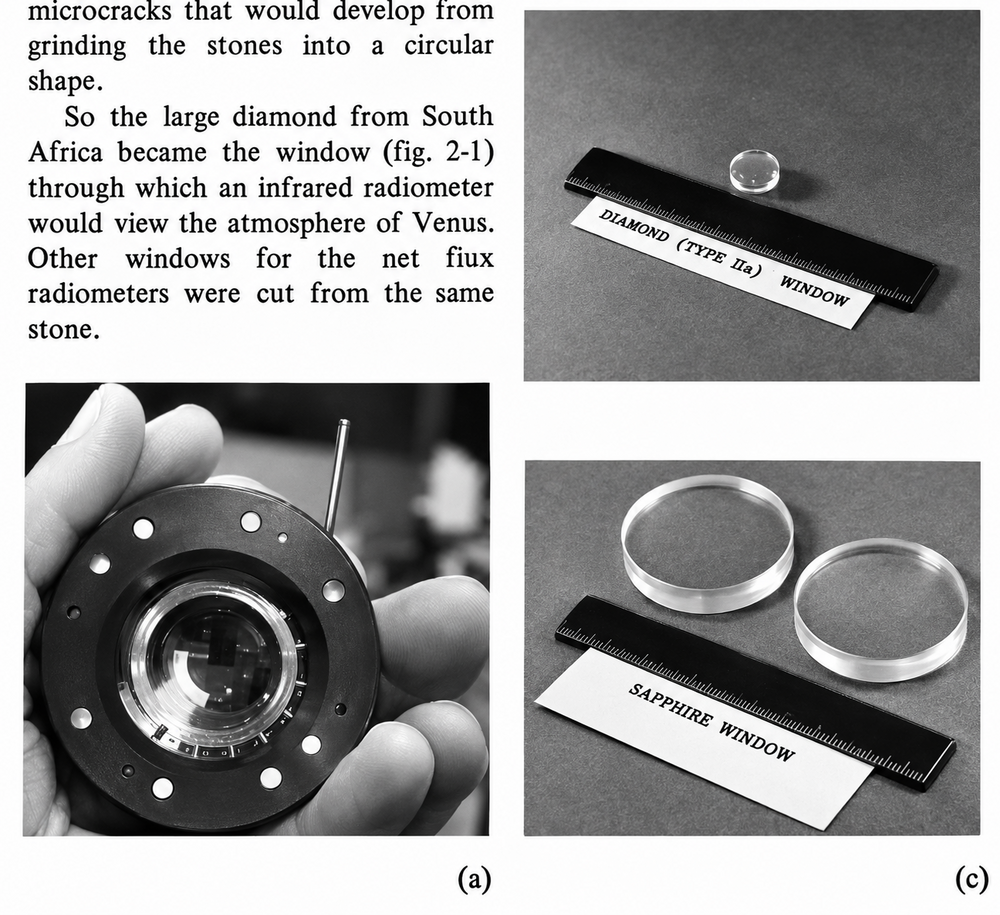
A diamond processed in Cuijk had travelled beyond Earth to become part of scientific research on another planet. For Drukker & Zonen, this project represented far more than an extraordinary assignment. It was an impressive demonstration of the technological capabilities that Cuijk's diamond industry had developed.What had begun in 1953 with the training of a new generation of diamond craftsmen had, in just 25 years, evolved into an industry capable of manufacturing highly precise components for one of the most challenging space missions of its time.
From polishing gemstones to manufacturing precision components for NASA.
The Venus diamond window became one of the first great symbols of the technological transformation of Cuijk's diamond industry.
Pushing the Boundaries of Precision
New Generation of High Tech Diamond Products
Over the following years, the diamond industry in Cuijk continued to develop into a specialist in advanced technical diamond products. The knowledge and expertise originally acquired through traditional gemstone polishing were now being applied to a wide range of industrial and scientific applications.
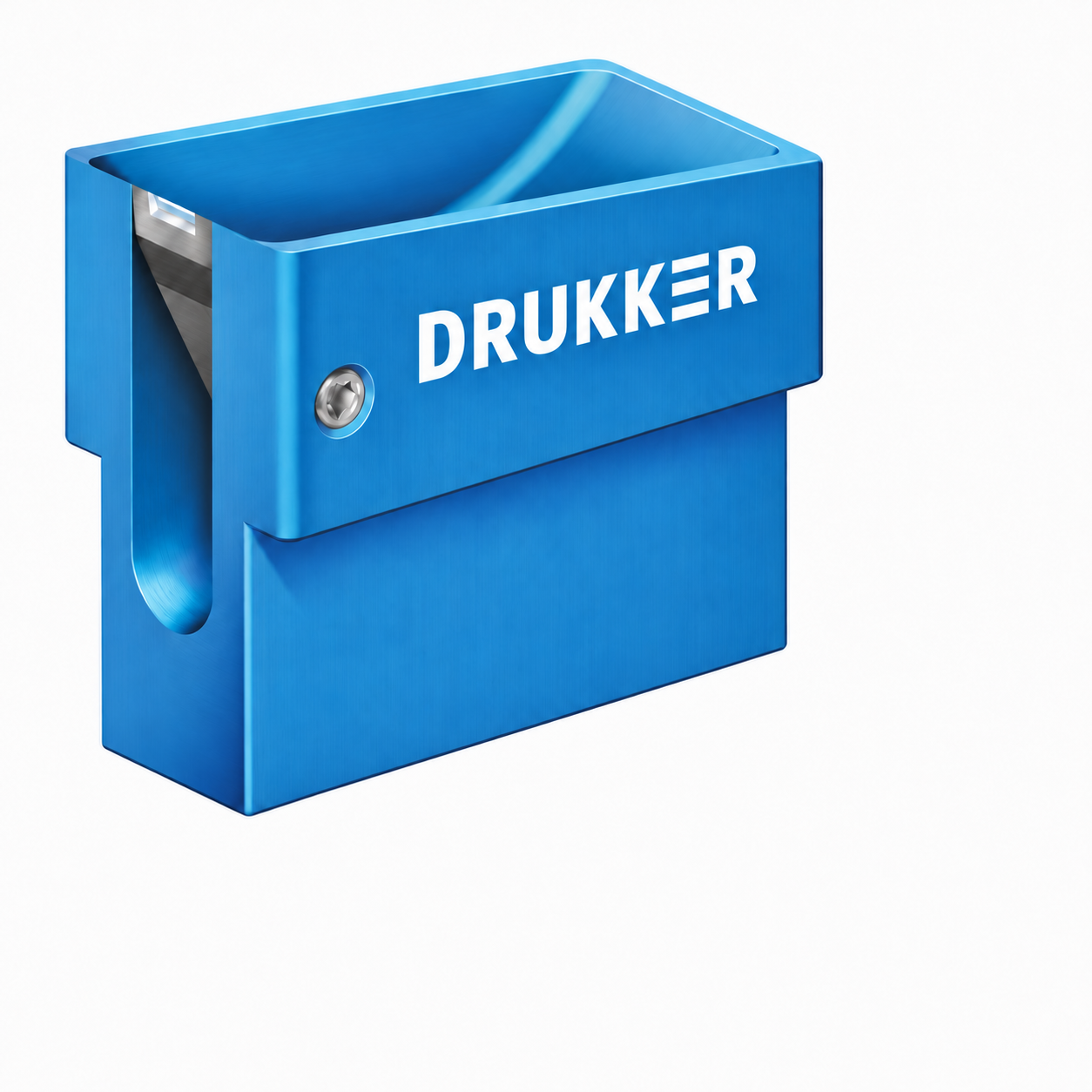
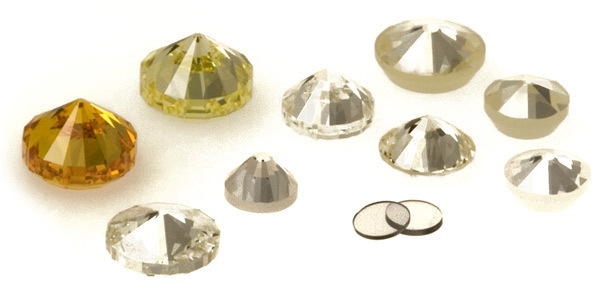
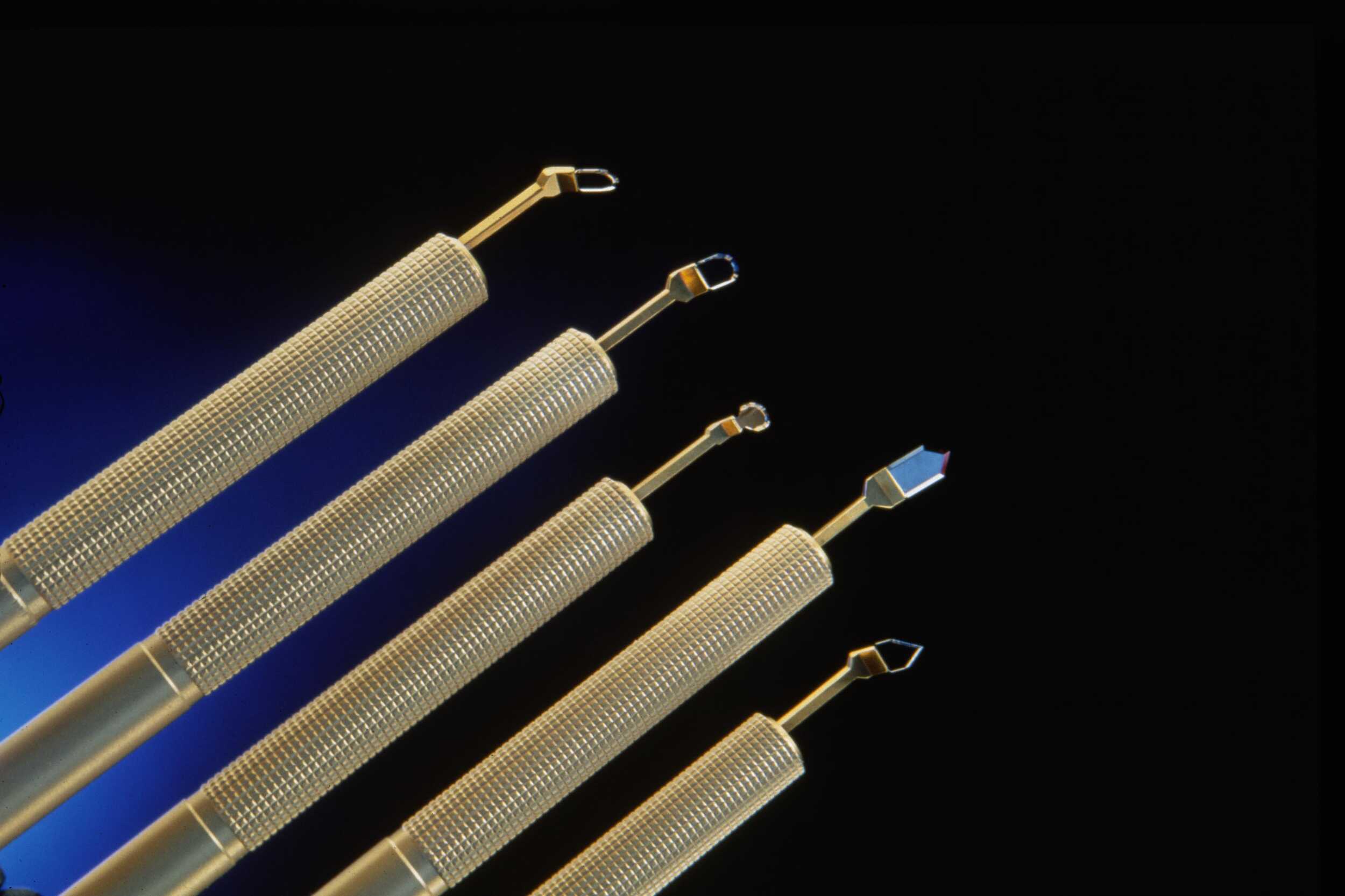
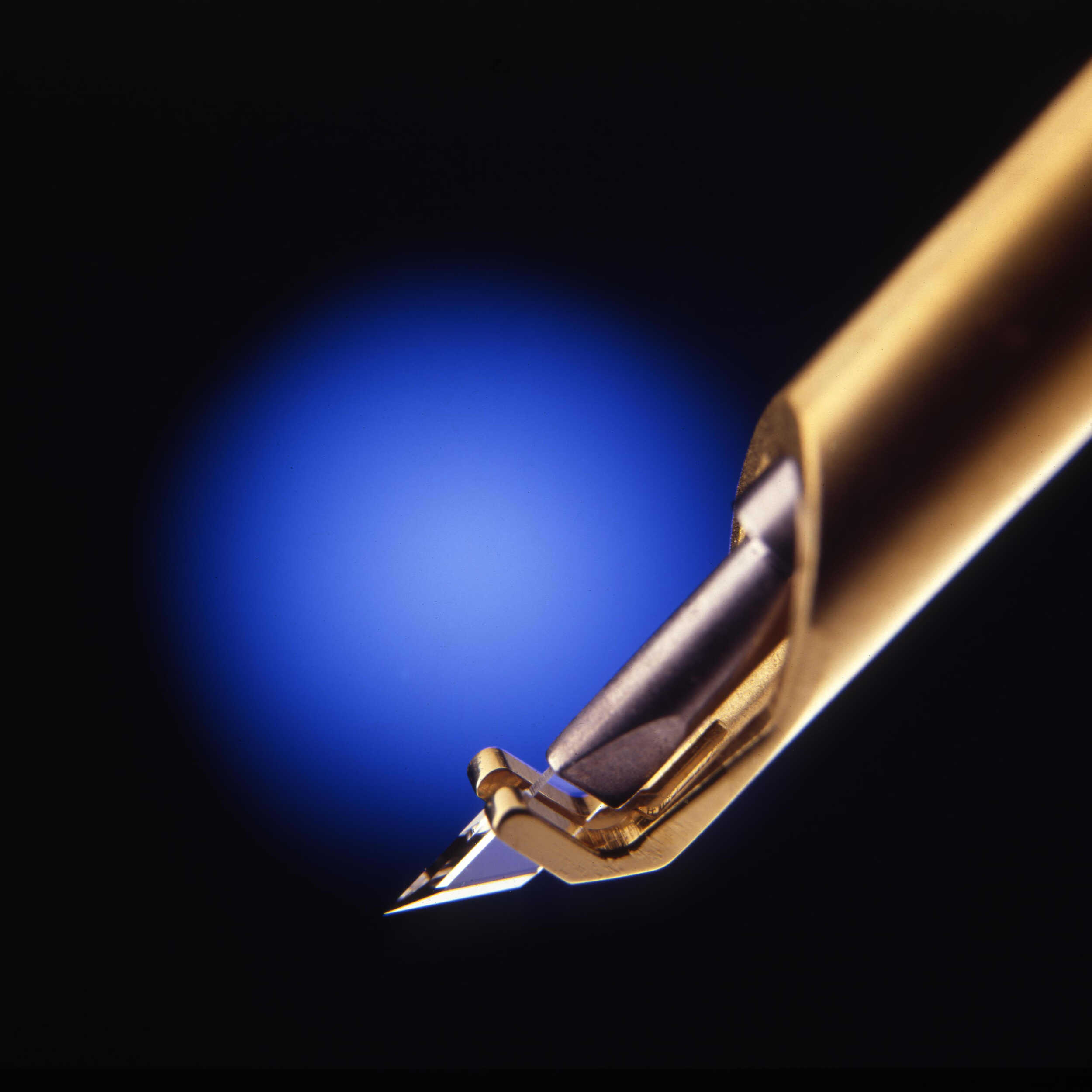
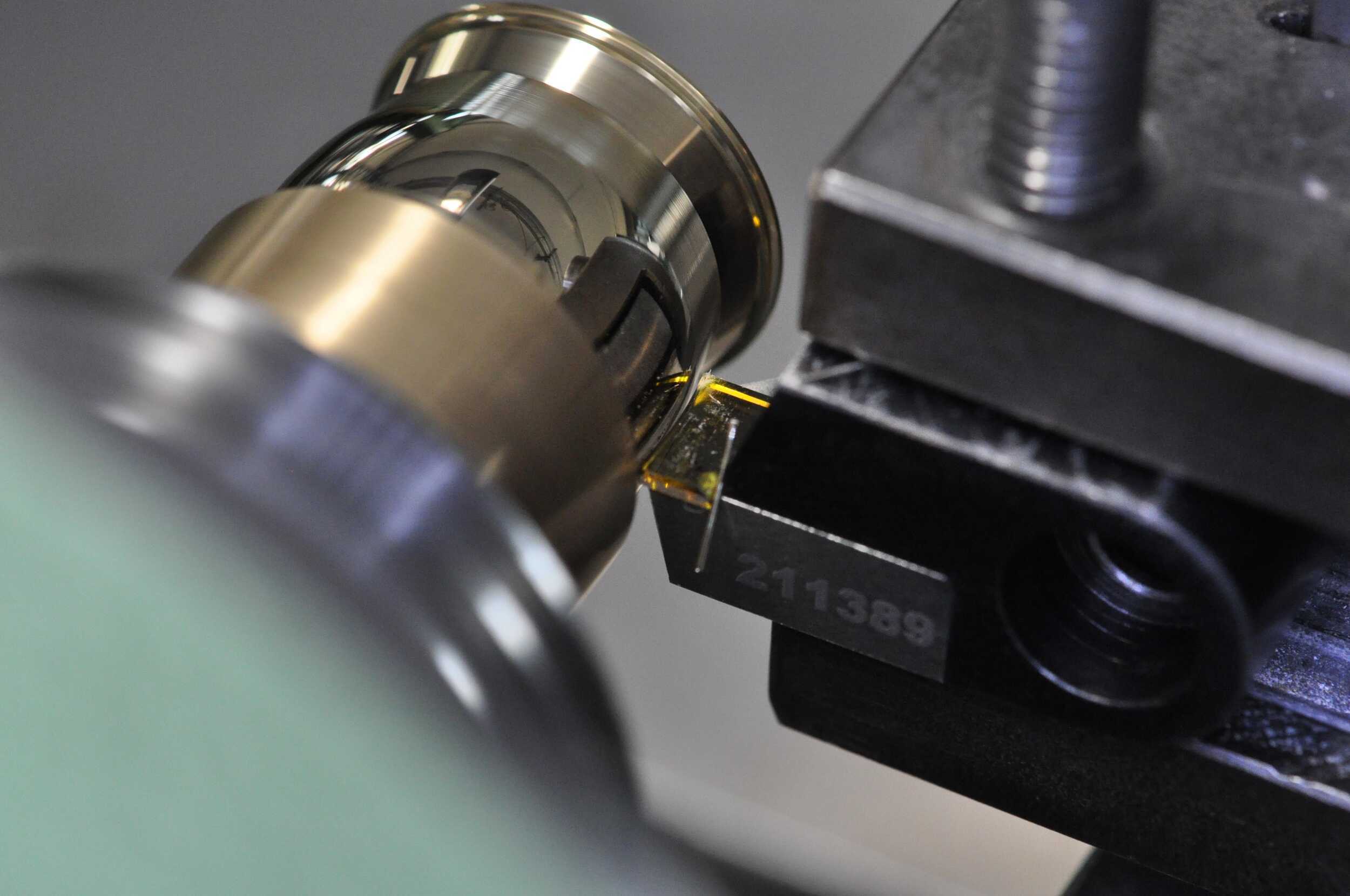
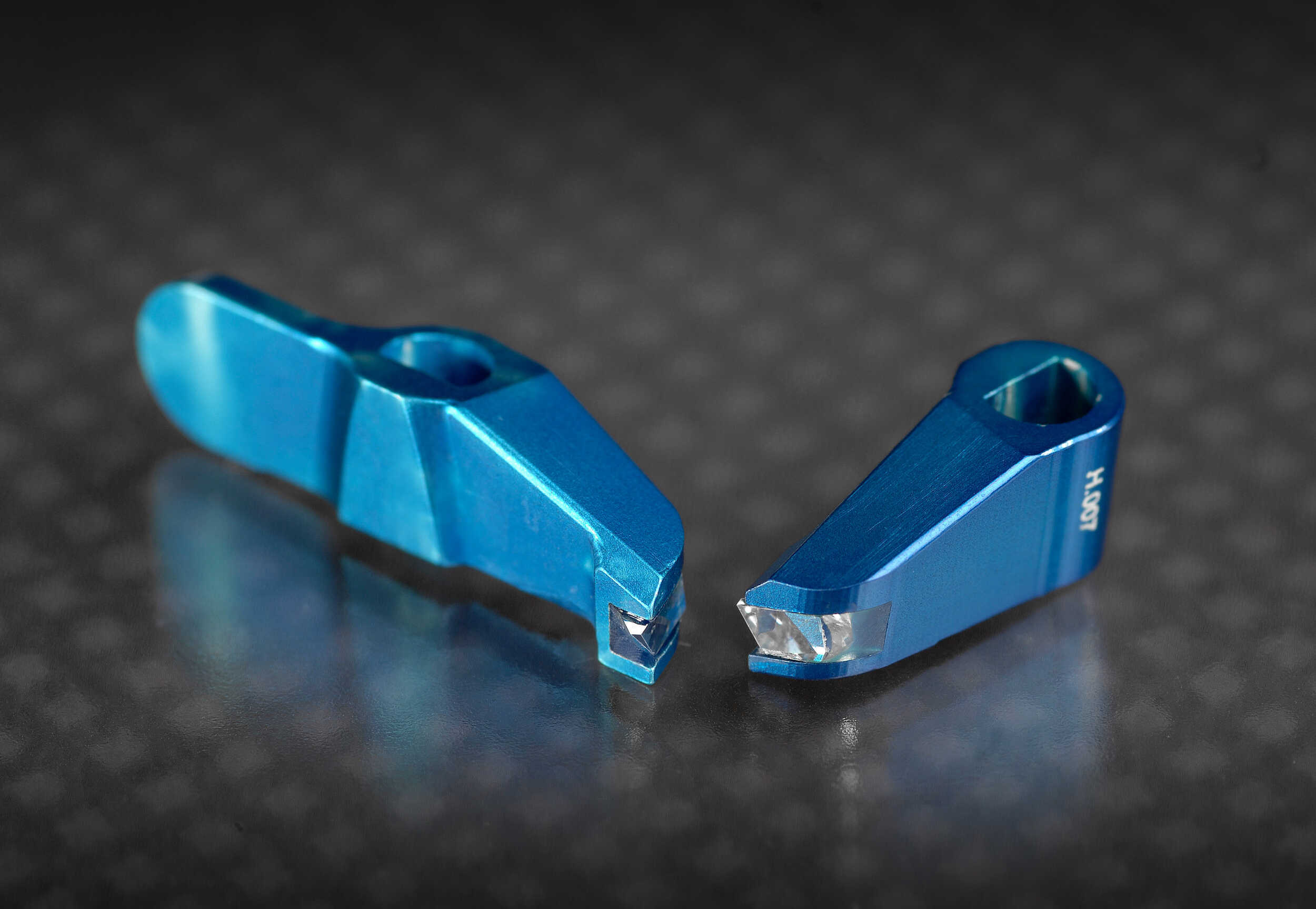
Diamond anvils were supplied to universities and research institutes worldwide for scientific research under extremely high pressure. For the medical industry, ultra microtome knives. ultra sharp diamond surgical blades were manufactured, primarily for use in eye surgery. Specialised diamond milling tools were also developed for the production of intraocular lenses. Demand for highly precise diamond tools continued to grow across other industries. Applications ranged from ultra precision turning and milling tools to specialised tools for rotogravure and cleavers for the fibre optic industry.
All these applications had one thing in common: they demanded exceptional accuracy and an increasingly sophisticated mastery of diamond processing.
An Extraordinary Achievement in Precision Engineering
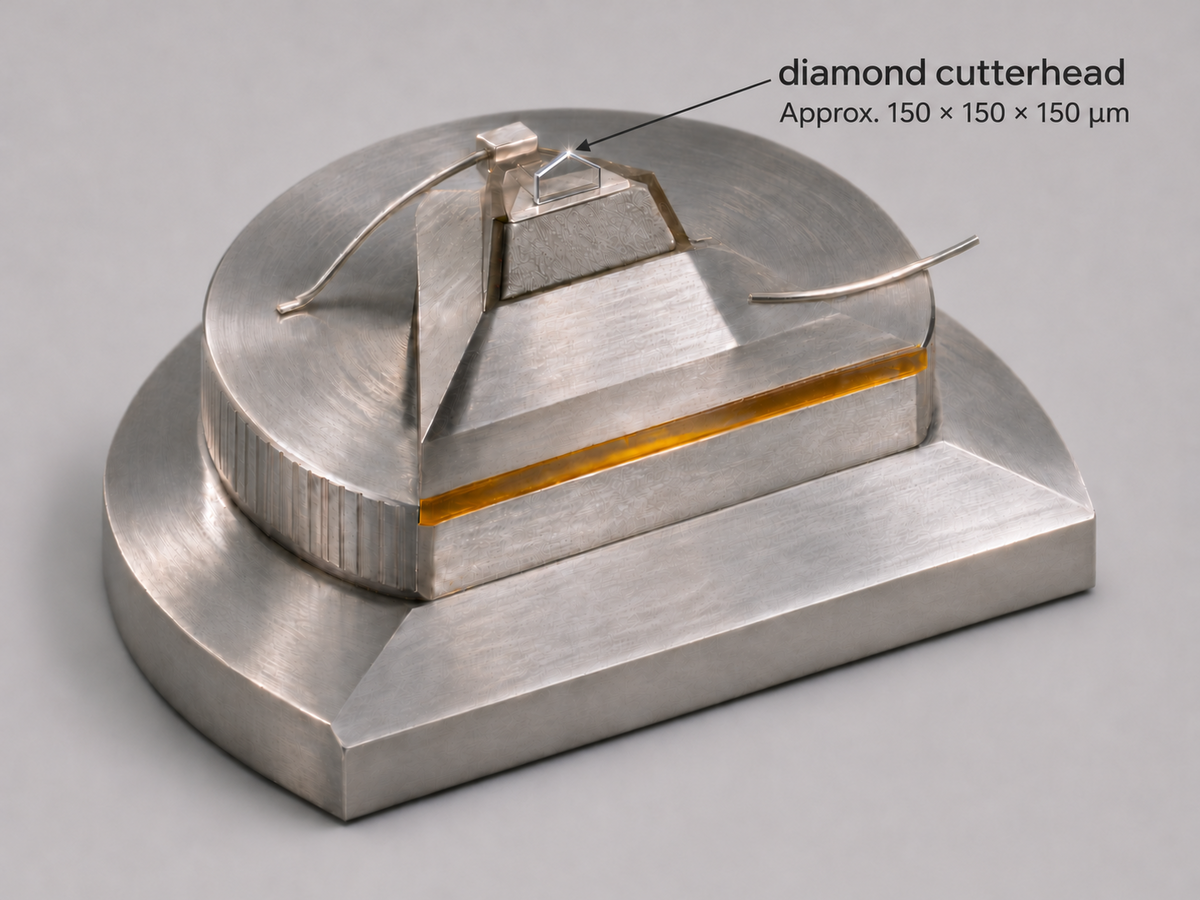
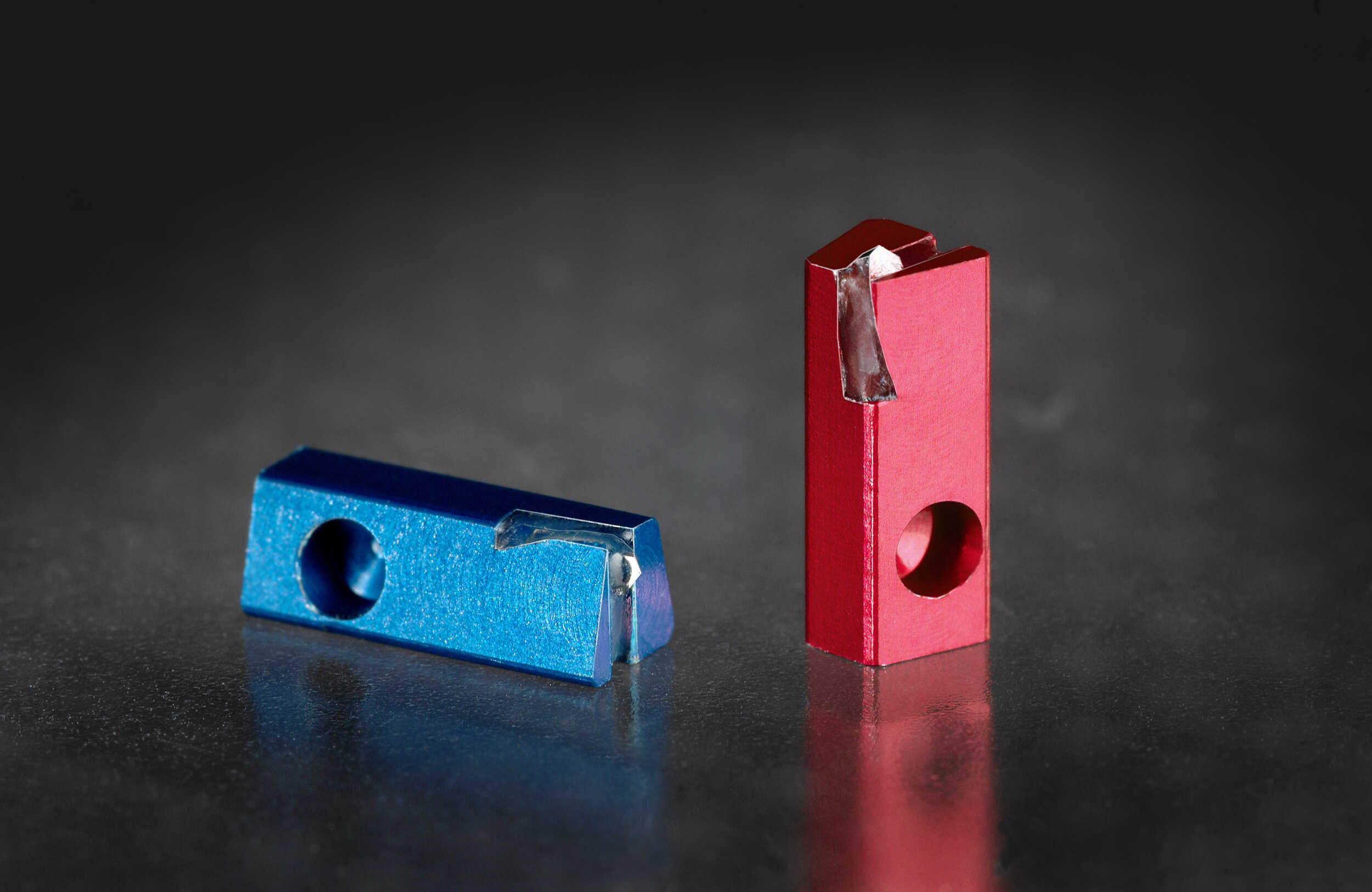
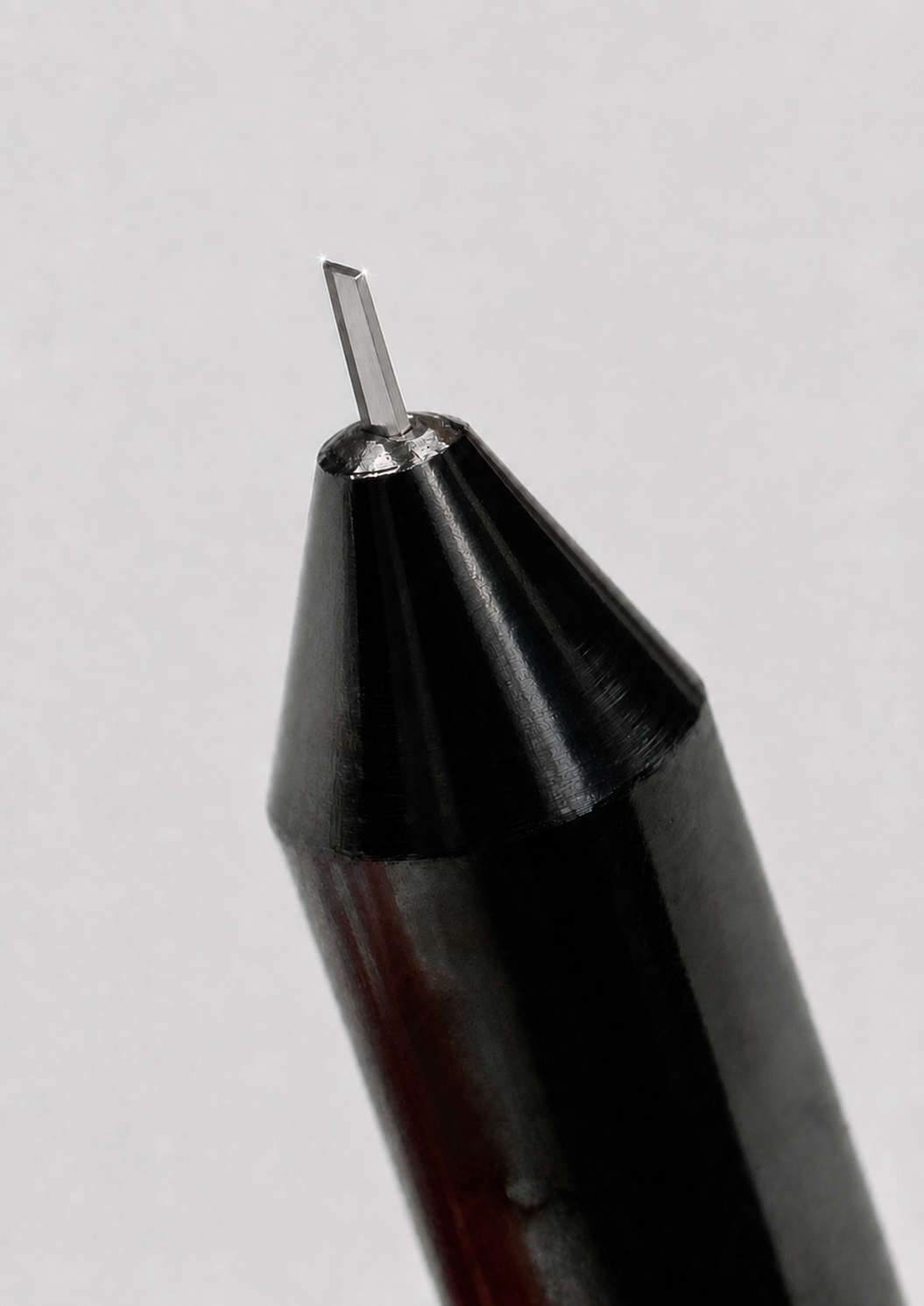
One of the most remarkable developments was the production of so called cuttingheads. These microscopic diamond cutting tools were used in the manufacturing of video discs. The technical challenge was enormous. Producing these tools required the development of specialised polishing techniques, machinery and supporting equipment. Not only were their dimensions exceptionally small, but their cutting edges also had to achieve extraordinary sharpness and precision.
The cuttingheads measured just 0.15 × 0.15 × 0.15 millimetres.
Perhaps the best illustration of their incredibly small size was the way they were packaged. Inside the small box in which the cutting tool was delivered, a tiny circle had been drawn. Somewhere within that circle lay the almost invisible tool. That was where the customer had to look to find the product.
It was a remarkable demonstration of the level of precision that had been achieved in Cuijk. The development of these cuttingheads not only resulted in new products, but also drove significant advances in diamond polishing technology, machine development and ultra precision manufacturing techniques.
The expertise gained from these developments would later be applied to another extraordinary challenge: polishing the smallest brilliant cut diamond in the world.
An achievement that would once again bring international recognition to Cuijk's diamond industry.
1987: The World's Smallest Brilliant Cut Diamond
A World Record from Cuijk
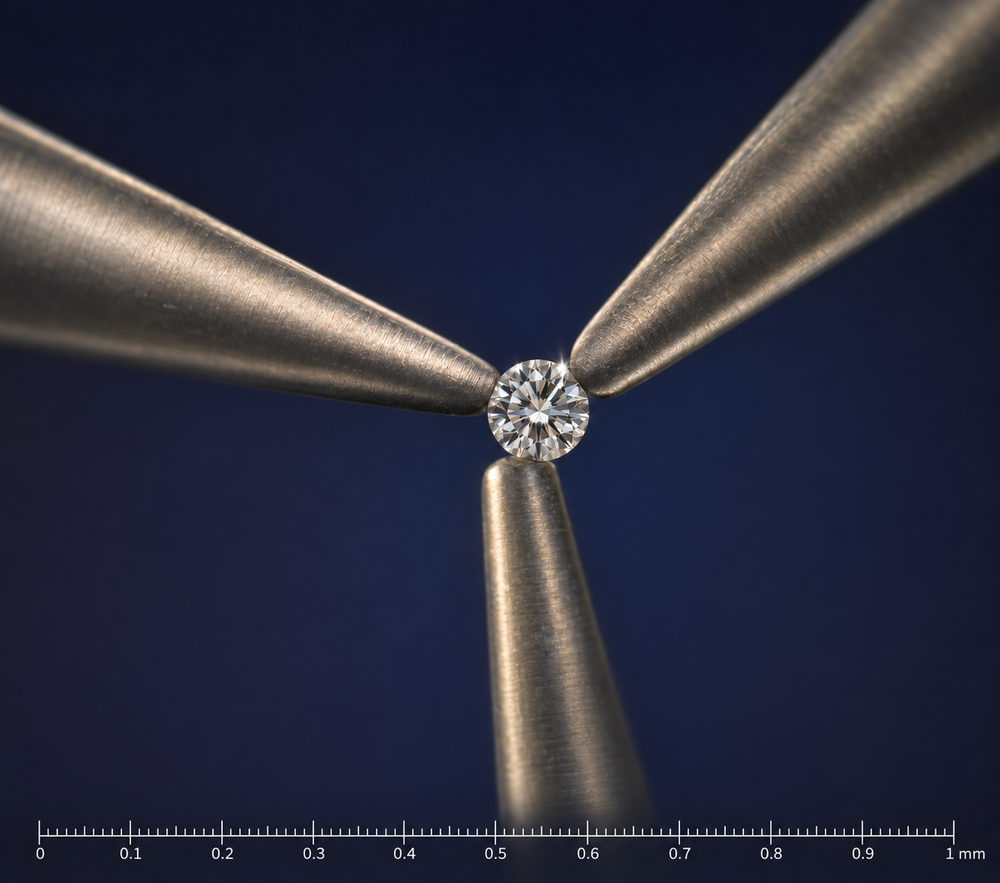
After years of pushing the boundaries of diamond processing, Drukker & Zonen in Cuijk took on an extraordinary challenge: polishing the world's smallest fully faceted brilliant cut diamond. The knowledge and technology developed for manufacturing microscopic diamond cutting tools used in the production of video discs provided the foundation for this remarkable project. Using specially developed equipment and ultra precision processing techniques, a natural diamond was polished into a fully faceted brilliant cut diamond measuring just 0.22 millimetres in diameter. Despite its microscopic dimensions, the diamond featured all 57 facets, carefully polished to the correct proportions.
It weighed just 0.0001022 carats, equivalent to approximately 0.0000204 grams.
In the accompanying historical photograph, the tiny diamond can be seen carefully positioned between the tips of three extremely sharp needles. This remarkable arrangement made it possible to display an almost invisible gemstone. However, keeping the diamond in position was not always easy, as the author of this story can personally recall. On several occasions, the author had the unusual pleasure of carefully repositioning the tiny diamond between the three needle tips after it had returned from an exhibition, having fallen out of its setting during its travels. A delicate task that once again demonstrated just how extraordinarily small this diamond really was.
The polishing process required more than 70 hours of work and involved advanced technologies, including laser processing, ultra precise positioning systems and electron microscopy. The result was a technical masterpiece, officially recognised by the Guinness Book of Records as the smallest brilliant cut diamond in the world.
What made this world record particularly remarkable was that it resulted not only from traditional diamond polishing craftsmanship, but also from innovative technology originally developed for manufacturing industrial diamond cutting tools. Technology designed to produce microscopic cutting tools had made it possible to take a centuries old craft to an unprecedented level of precision.
The world record was a remarkable demonstration of the technological progress achieved by Cuijk's diamond industry since 1953. From training the first generation of diamond craftsmen to creating a brilliant cut diamond barely visible to the naked eye. A world record that brought together more than thirty years of craftsmanship, expertise and innovation.
Photo caption: The world's smallest brilliant cut diamond, measuring just 0.22 millimetres in diameter, positioned between the tips of three extremely sharp needles.
The 1990s: A New Revolution in Diamond Technology
From Natural Diamond to Lab Grown Diamond
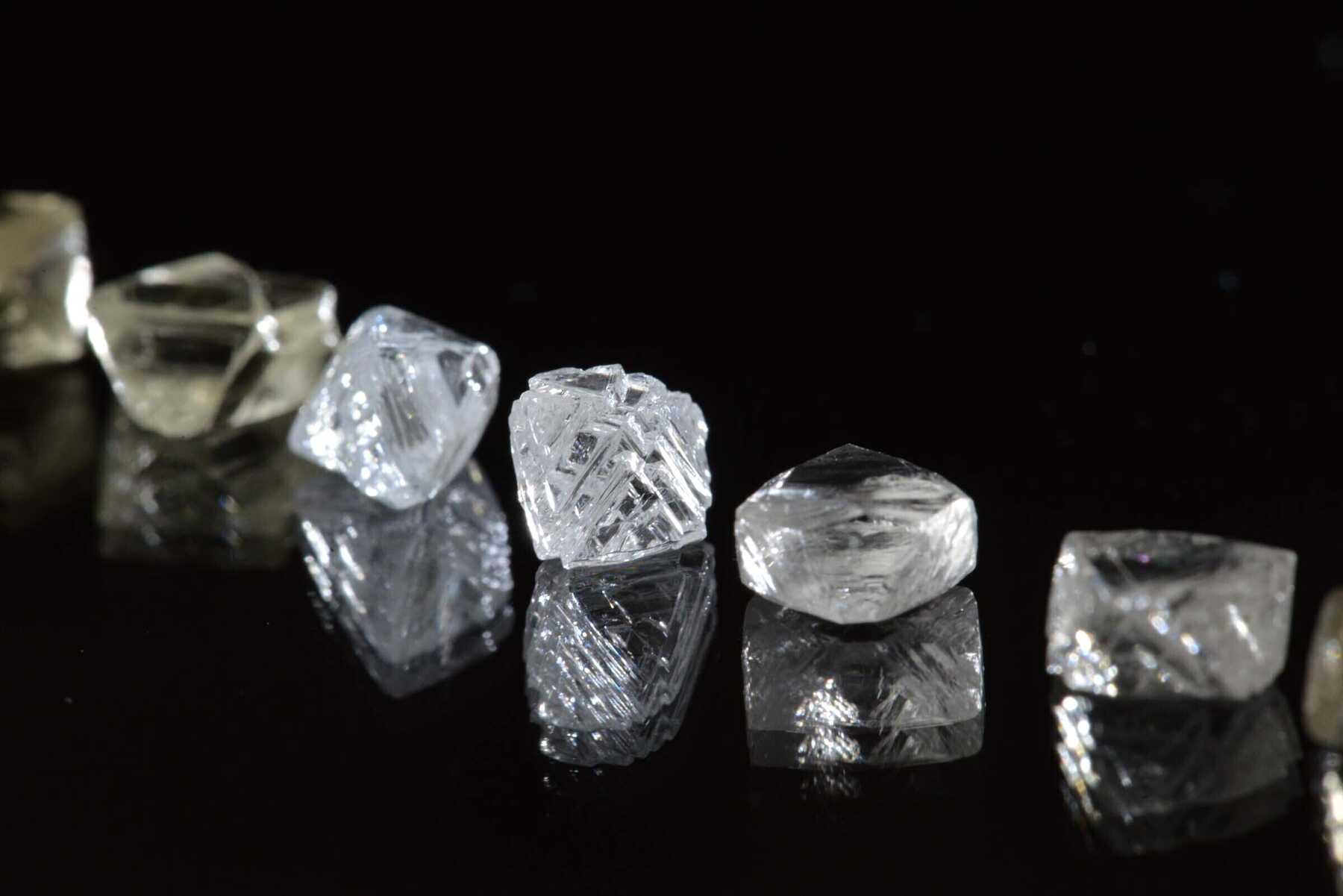
In the late 1980s, another development emerged that would fundamentally transform the future of Cuijk's diamond industry. After decades of working almost exclusively with natural diamonds, the first experiments with growing diamonds under controlled conditions began. Although synthetic diamond had already existed for some time, its availability, dimensions and quality were not always suitable for the highly demanding industrial applications in which Cuijk had specialised. That began to change during the 1990s.
Rapid technological advances made increasingly high quality synthetic diamond material available. Material quality improved significantly, while the possibilities for industrial applications continued to expand. Within a period of approximately five years, the majority of existing product groups were converted from natural to lab grown diamond. This transition represented far more than simply introducing a new raw material. It also fundamentally changed the way diamonds were processed.
The End of Traditional Diamond Sawing
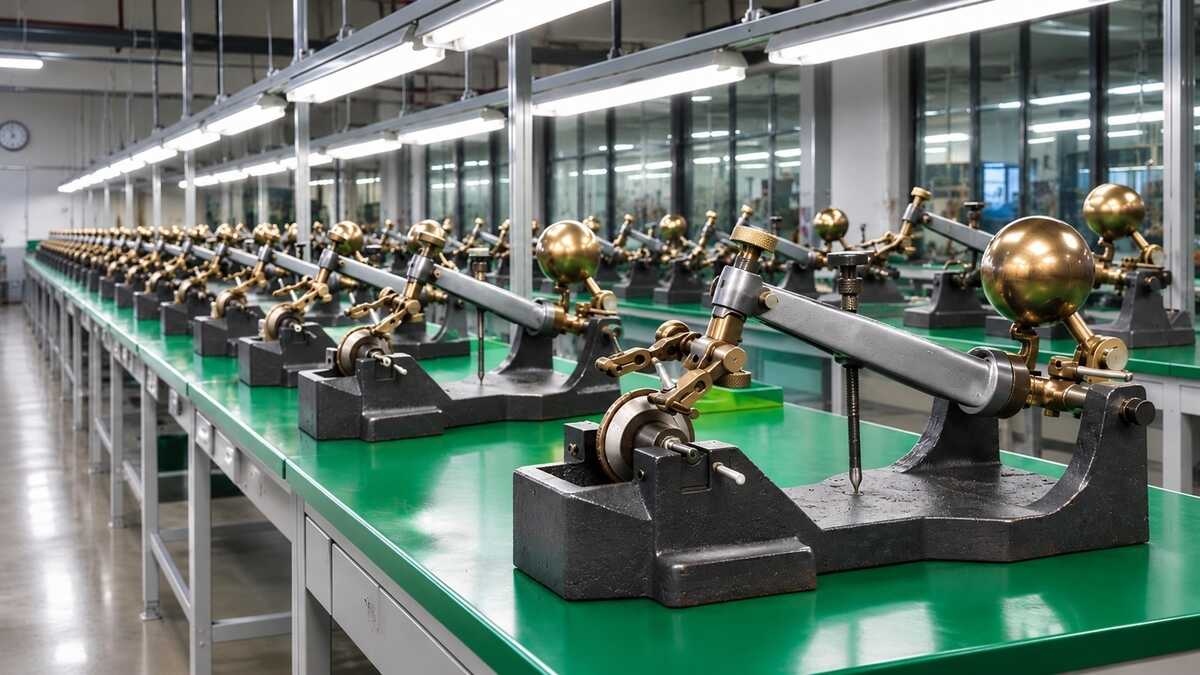
One of the most visible transformations took place in the diamond sawing department. For decades, hundreds of small mechanical diamond sawing machines had been operating here. Natural diamonds were cut with exceptional precision, in a process that demanded considerable time, experience and craftsmanship.
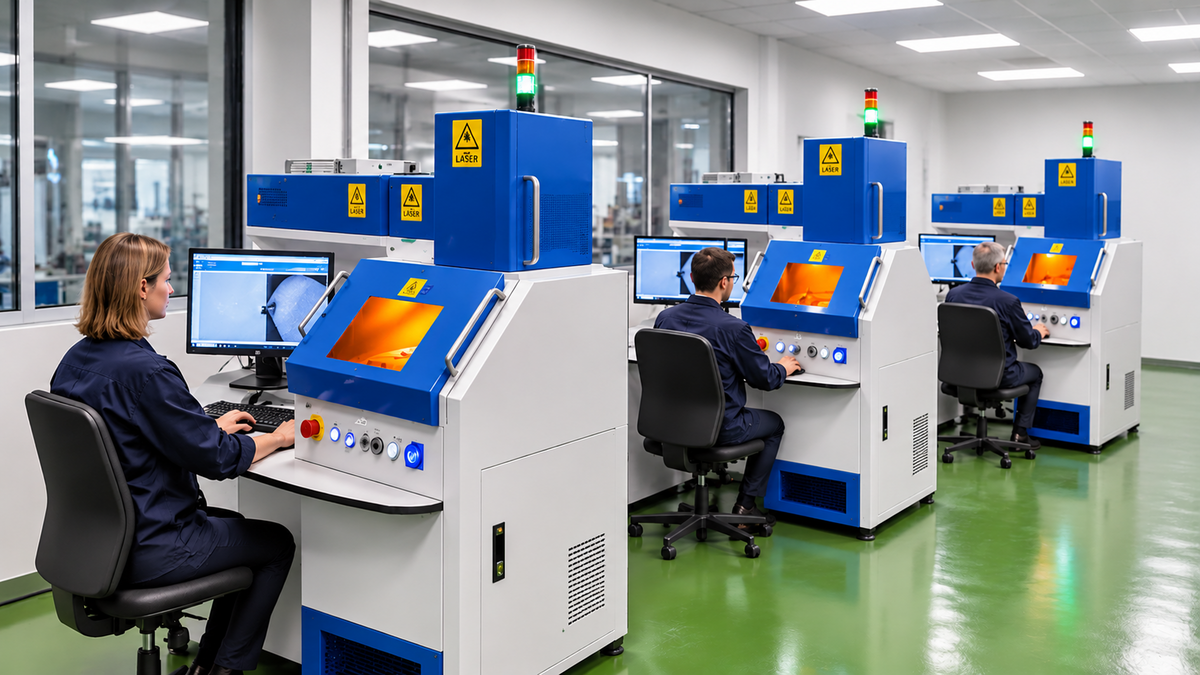
It was a familiar sight throughout the factory: long rows of diamond sawing machines working day and night. With the increasing availability of synthetic diamond and the advancement of laser technology, this changed dramatically. Traditional mechanical sawing machines gradually gave way to modern laser systems, allowing diamonds to be processed faster, more accurately and with considerably greater flexibility. What had once been a time consuming mechanical operation increasingly became a technologically controlled manufacturing process.
An entire department that had played a vital role in the company for decades was transformed by a new generation of manufacturing technology.
A New Foundation for the Future
The combination of high quality synthetic diamond, advanced laser processing and the company's established expertise in precision engineering opened up an entirely new range of possibilities. The company became less dependent on the availability and dimensions of natural diamonds.
At the same time, new opportunities emerged to develop products more closely tailored to the specific requirements of industrial customers.This transformation provided an important foundation for the company's continued development. The 1990s became a period in which traditional diamond craftsmanship increasingly merged with advanced manufacturing technology. Following the earlier transition from gemstones to industrial applications, Cuijk had taken another decisive step: from natural diamonds and mechanical sawing techniques to lab grown diamonds and modern laser processing.
A technological revolution that would pave the way for the next period of strong industrial growth.
Late 1990s: A Period of Remarkable Growth
Diamond Heatsinks and the Rise of the Telecommunications Industry
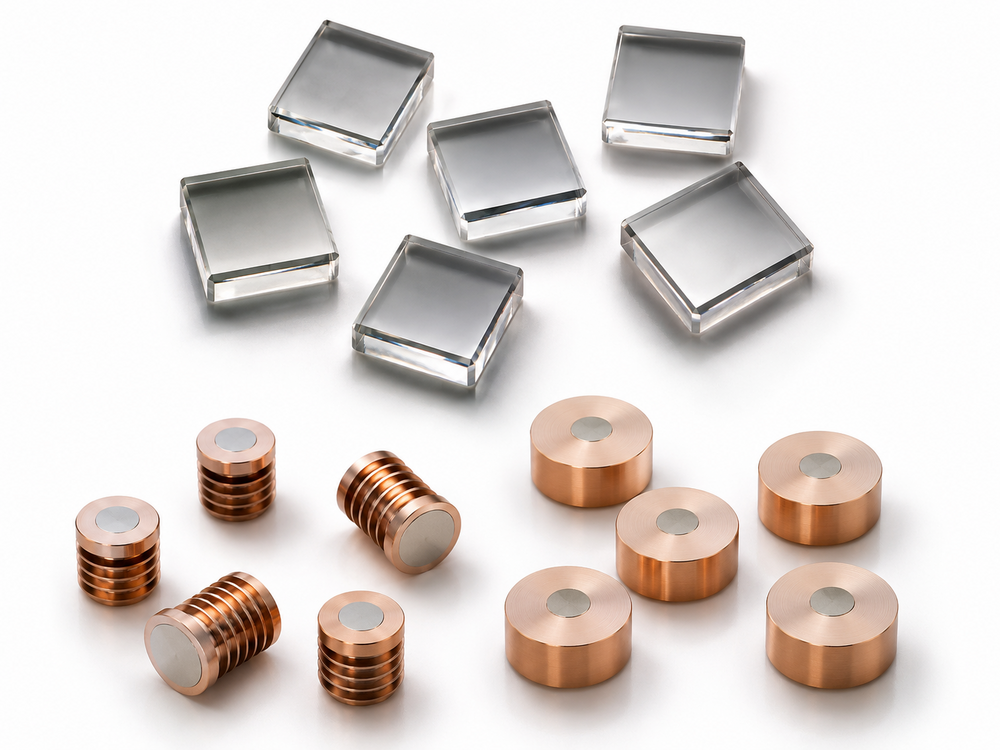
During the second half of the 1990s, Cuijk's diamond industry experienced a period of exceptional growth. One of the main driving forces was a product group that had been developed years earlier but was now gaining considerable commercial importance: diamond heatsinks.
Thanks to diamond's exceptional thermal conductivity, these small precision components were ideally suited for advanced electronic applications. The rapid expansion of the global telecommunications industry created significant opportunities. As fibre optic networks expanded worldwide, demand for specialised electronic and optical components increased sharply. International companies such as Norton Telcom and Alcatel became important customers for these diamond products.The rapid expansion of the global telecommunications industry created significant opportunities. As fibre optic networks expanded worldwide, demand for specialised electronic and optical components increased sharply. International companies such as Norton Telcom and Alcatel became important customers for these diamond products.
Investing in Technology and Manufacturing
To meet the growing demand, substantial investments were made in specialised machinery, advanced production technologies and manufacturing capacity.
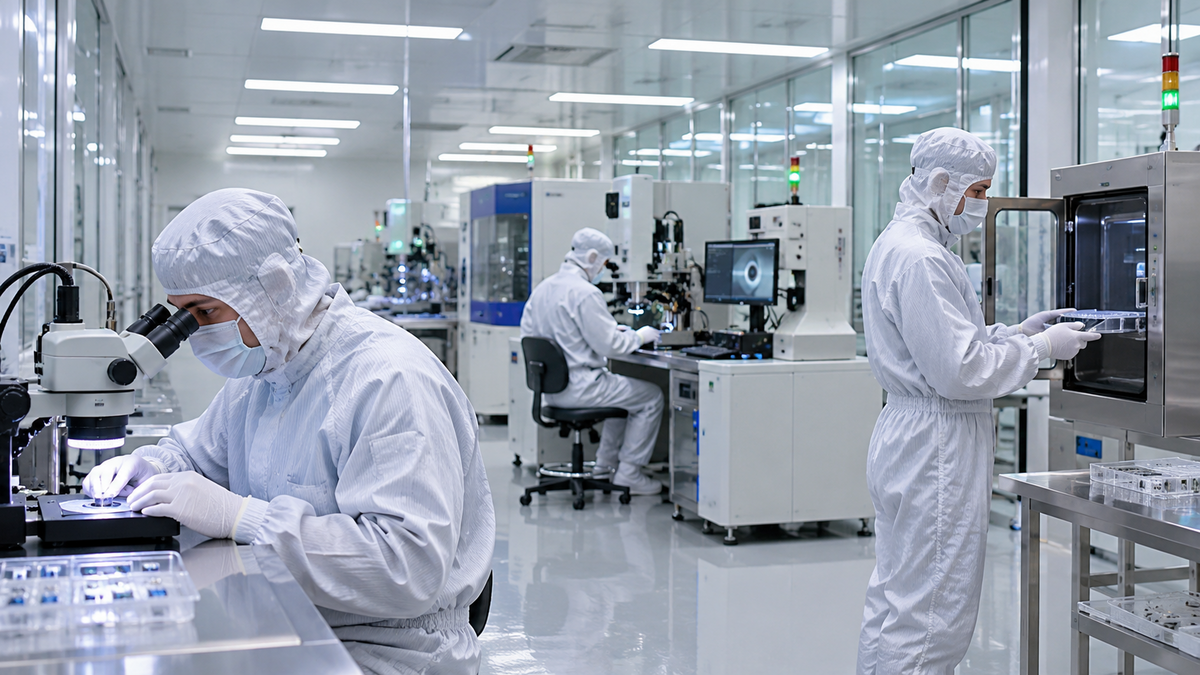
In addition to precision diamond processing, sputtering techniques were developed to apply extremely thin bonding layers to diamond surfaces, allowing the components to be integrated into sophisticated electronic systems. Considerable investments were also made in modern cleanrooms, providing the controlled environments required for manufacturing and handling highly sensitive precision components. The company's workforce grew rapidly. Between the second half of the 1990s and the beginning of the new millennium, the number of employees increased from approximately 160 to nearly 300.
Cuijk had become an important manufacturing centre within the international industrial diamond industry.
The Other Side of Success
Rapid growth, however, also brought difficult decisions.
With a shortage of skilled workers and an increasingly competitive labour market, available production capacity had to be concentrated on the rapidly expanding heatsink business. As a result, several established product groups were scaled back or discontinued. One example was the complete divestment of the department producing diamond tools for the printing and graphic arts industry, which employed 17 people.
These decisions enabled the company to focus on the growing telecommunications market, but also reduced the diversity of its traditional business activities.
The First Signs of Change
Around the turn of the millennium, the international telecommunications market began to change dramatically. After years of massive investment in network infrastructure, growth expectations proved overly optimistic. From 2001 onwards, the industry experienced a severe downturn. What initially appeared to be a temporary slowdown gradually developed into a much more serious challenge. Expecting the market to recover, the company made considerable efforts to retain its skilled employees and preserve its specialised manufacturing capabilities. However, the anticipated recovery failed to materialise. The same telecommunications market that had driven years of remarkable growth had become a source of significant uncertainty.
The diamond industry in Cuijk was approaching another defining turning point in its history.
2002–2007: The End of an Era, the Beginning of a New Chapter
From Drukker International to Element Six
In 2002, the industrial diamond activities of De Beers were brought together under a new international name: Element Six. For the diamond industry in Cuijk, this marked the beginning of a period of significant change. The telecommunications market, which had driven the company's remarkable growth during the late 1990s, had suffered a severe downturn. What initially appeared to be a temporary setback gradually developed into a prolonged period of uncertainty. Despite considerable efforts to retain employees and preserve the expertise built up over decades, the anticipated recovery failed to materialise. Several reorganisations followed, resulting in a gradual reduction of both activities and workforce.
A New Direction
By 2006 and 2007, a decision was made to continue operations in Cuijk with a much smaller organisation, focusing exclusively on optical diamond components. A specialised team of approximately twelve employees remained, concentrating on this particular field of diamond technology. Other activities, machinery and equipment that were no longer required for optical manufacturing were offered for sale. A significant part of these assets was eventually acquired by the Swiss company Anton Meyer & Co. AG, a specialist in precision diamond tools.
It marked the end of a remarkable industrial era. An operation that had employed nearly 300 people only a few years earlier had undergone a fundamental transformation.
2006: A New Future for Cuijk's Diamond Industry
An Unexpected Encounter
As Element Six prepared to sell activities and assets that were no longer part of its core business, negotiations were taking place with the Swiss company Anton Meyer & Co. AG. In December 2007, during the final stages of these negotiations, contact was established with a former Element Six manager who had started his own technical business in 2006. With many years of experience in machine development, precision engineering and industrial diamond processing, he brought extensive technical expertise and an international network of specialised companies. During their initial discussions, he advised Anton Meyer on the activities, machinery and technical opportunities associated with the proposed acquisition. His detailed knowledge of the existing manufacturing processes and the technical value of the various assets provided valuable insight into the potential of the acquisition.
What began as technical advice during an acquisition process in December 2007 would develop into a collaboration that laid the foundation for the establishment of Dutch Diamond Technologies.
2008: The Birth of Dutch Diamond Technologies
An Opportunity That Comes Once in a Lifetime
Following the acquisition of various assets from Element Six, Anton Meyer & Co. AG found itself in possession of considerably more than the product groups it originally intended to integrate into its existing portfolio. The acquisition also included a substantial inventory of natural and lab-grown diamonds, numerous specialised machines and tools, and several unfinished development projects that Element Six had decided not to pursue. Many of these machines and production systems had been developed in Cuijk over decades. They were part of what remained of a manufacturing operation that had once employed nearly 300 people. Although these assets represented considerable technical knowledge and potential, much of the equipment and several of the development projects had little immediate application within Anton Meyer's existing organisation. During the discussions that followed, a new idea emerged. Rather than allowing this accumulated knowledge, technology and manufacturing capability to disappear,
why not use these assets as the foundation for an entirely new diamond company?
Anton Meyer personally approached Ton Janssen, who had advised him during the acquisition negotiations, and asked whether he would be willing to establish and develop such a business. For many years, Ton had managed the company's toolmaking department, where he and his team had been responsible for developing specialised machinery, production equipment and prototypes for the diamond industry. In 2006, he had left Element Six to establish his own technical business. The opportunity to return to diamond technology, this time as an independent entrepreneur, brought together his technical experience and entrepreneurial ambitions. Some opportunities present themselves only once in a lifetime.
This was one of them.
Back to Where It All Began
In 2008, Dutch Diamond Technologies was established. Anton Meyer provided the financial backing, while Ton Janssen and a small, dedicated team took responsibility for building the new company. But there was something particularly remarkable about this new beginning. Dutch Diamond Technologies was established on the very same site, and even in the original buildings, where Cuijk's diamond industry had first begun in 1953. More than half a century after the first young diamond polishers had entered those workshops, a new generation of diamond technology was taking shape within the same walls. Meanwhile, Element Six continued its optical diamond activities in Cuijk for several more years before eventually leaving the town. This marked the final departure of the company that had played such an important role in Cuijk's industrial diamond history.The company was new, but its foundations were deeply rooted in decades of craftsmanship, technical expertise and innovation.
What began in 1953 had come full circle. A new company. The same foundations. A continuing tradition of diamond innovation.
2008 to Today: A Family Business with a Global Reputation
Built on Experience, Driven by Passion and Innovation
What began in 2008 with a small team, a collection of specialised machines and a strong entrepreneurial spirit has since grown into a successful international family business. Under the name Dutch Diamond Group, we have developed a broad portfolio of high quality diamond products and precision components serving a wide range of industries. From optical components and ultraprecision tools to diamond components for medical technology, scientific research and advanced industrial applications. Through continuous investment in knowledge, technology and product development, we have earned the trust of leading OEMs around the world.
But behind these international activities, we remain a family business.
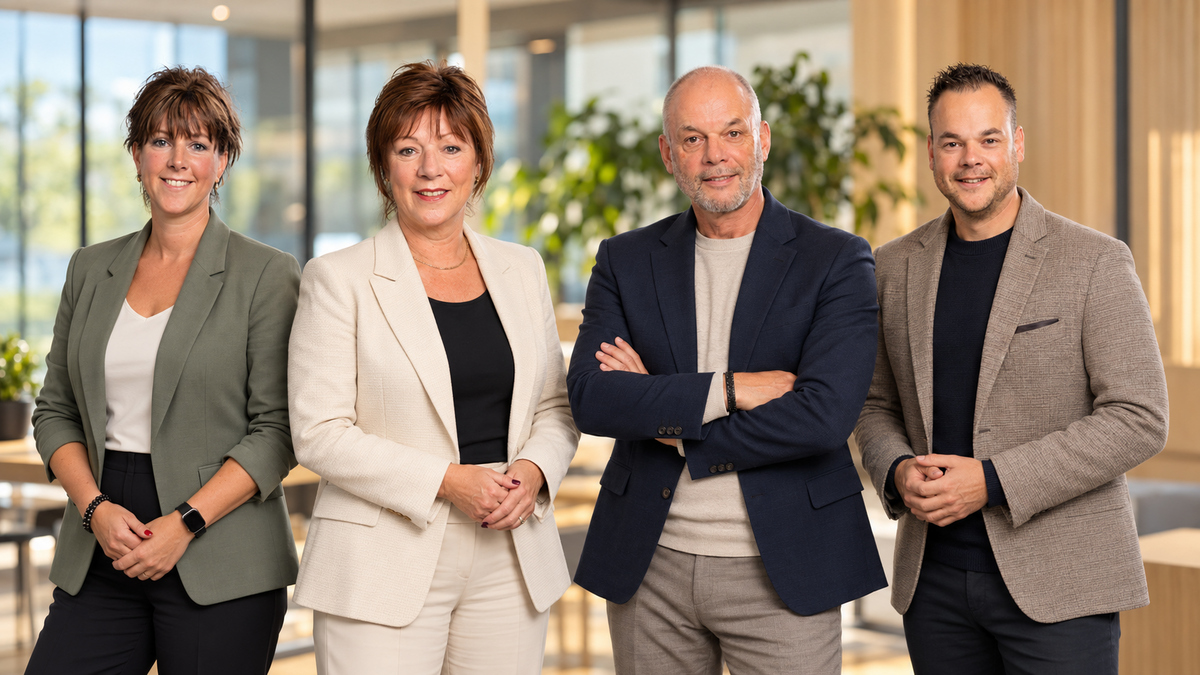
Ton and Elisee Janssen continue to work alongside their children, Marjolein and Chris, within the company. The involvement of two generations is an important part of Dutch Diamond Group's identity and continuity. In 2025, an important step was taken to secure this continuity for the future. Ton and Elisee transferred their shareholding to the next generation, while remaining actively involved in the company's continued development. This transition not only helped shape the future of the family business, but also ensured the continuation of a remarkable industrial heritage.
A heritage that began in 1953 with a small group of young diamond polishers in Cuijk and evolved over more than seventy years into internationally recognised diamond technology. And perhaps that is the most remarkable part of this story. The technology has changed. The markets have changed. Generations are changing. But the passion for diamond and the determination to push boundaries have remained.